Arbuz.kz expands to new cities while Freedom Bank implements AI in compliance: Key takeaways from the Digital Qazaqstan Forum
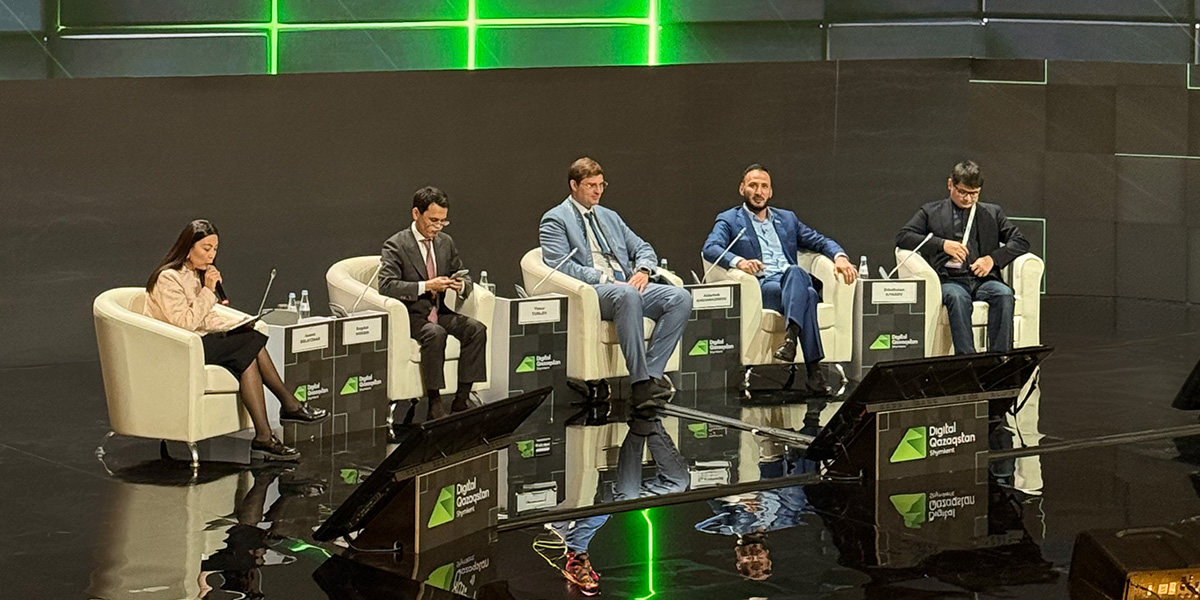
Founder and CEO of Freedom Holding Corp. Timur Turlov spoke at the Digital Qazaqstan forum held in Shymkent on March 27. The event brought together six thousand participants, including prime ministers of EAEU countries, Kazakh government officials, entrepreneurs, researchers, and digitalization specialists to discuss the development of digital technologies in the region.
In addition to Timur Turlov, other top managers of the holding also spoke at the forum – Renat Tukanov, Chief Technology Officer of Freedom Holding Corp., and Ainur Temirkhankyzy, Advisor to the Chairman of the Management Board for Digital Products and Processes at Freedom Bank. Freedom Bank, a subsidiary of Freedom Holding, served as the general partner of Digital Qazaqstan 2026.
Why Entrepreneurship Is Growing in the Regions
Timur Turlov spoke at the opening session of the forum titled “Digitalization as the Foundation of Kazakhstan’s Economic Development.” Other speakers included Bagdat Mussin, Chairman of the Management Board of Kazakhtelecom JSC, Aidarbek Khojanazarov, Member of the Mazhilis of the Parliament of the Republic of Kazakhstan, and Yerkebulan Ilyassov, Chairman of the Board of Directors of Alageum Electric Group.
Participants discussed the development of digitalization in Kazakhstan’s regions and its impact on entrepreneurship beyond Almaty and Astana.
Speakers noted that entrepreneurship in Kazakhstan’s regions is currently developing particularly rapidly. Timur Turlov considers this phenomenon natural: according to the head of Freedom Holding, regions outside major cities retain significant potential for business development, including due to lower competition.
“Why are businesses interested in the regions? Because businesses are always interested in opportunities – where there is potential for growth. New markets are often less competitive. You can sell slightly higher than in the capital or buy slightly cheaper. You can find unique specialists — and that is the opportunity. Talented people are born across the country, not only in the capital. Thanks to our branch network, we have already attracted a large number of talents and continue to find them. At the same time, new opportunities are emerging. Sometimes you just need to replicate what was successfully built in one city five years ago – and implement it now in another city. That also works and generates revenue,” said the CEO of Freedom Holding Corp.
Timur Turlov emphasized that any entrepreneur must understand their country and their market well.
“Developing the regions is simply profitable – if done correctly,” said Timur Turlov.
The head of the holding also shared his experience and perspective on attracting capital. He noted that in order to grow into a large business, it is necessary from the outset to “play by its rules,” namely to adhere to strict compliance standards and transparency.
“To attract capital, especially in developed markets, you need to run your business according to the same rules as large companies. Access to capital in most cases opens when you operate transparently, pay taxes, and distribute profits through dividends equally to all shareholders. It is important that policies and control procedures do not allow these processes to be abused. When there are independent auditors overseeing this, when there is a board of directors trusted by investors and able to prevent risky decisions without shareholder approval. Compliance with these requirements in most cases opens the door both to second-tier banks and to investment banks – for example, for bond placements. The closer you are to these standards, the higher the quality of financial reporting and the easier it is to maintain dialogue with investors and banks,” said Timur Turlov.
The founder of Freedom Holding Corp. also reported that the grocery delivery service Arbuz.kz is now launching in Shymkent.
“Out of the millions of clients who opened accounts with us over the past 12–18 months, most are from the regions – and not from the largest cities. We built our food delivery business in Karaganda and are now launching a food and grocery delivery service in Shymkent. We saw demand forming very quickly. Despite differences in income levels and a lower average ticket compared to Almaty or Astana, the growth rate turned out to be impressive. In some cases, monthly performance matched the results we achieved in the capital over several years,” said Timur Turlov.
This year, Arbuz.kz launched drone delivery in Almaty. In addition to everyday use, this service has another purpose – delivering food, medicine, and essential goods to remote regions during natural disasters or emergencies.
How AI Is Transforming the Financial Sector
Special attention at the forum was given to the development of digital public services. Kazakhstan ranks among the top 10 countries in the world in online service development according to UN data, alongside South Korea, Denmark, Estonia, Singapore, the United Kingdom, Japan, and other digital leaders. At the same time, most CIS countries and a significant share of European states remain behind.
As reported by Deputy Minister of Artificial Intelligence and Digital Development of Kazakhstan Dmitry Mun at the Digital Qazaqstan forum, this year EGOV plans to launch its own AI agent Alem GPT.
Today, government services are already actively using artificial intelligence: more than 6.8 million monthly users are registered in Egov Mobile, more than 39 digital documents are available, AI-based public service search tools have been used more than 2 million times, more than 730 thousand users actively use this functionality.
According to the results of 2025, Kazakhstanis received more than 50 million public services online, almost half of them through the mobile application eGov Mobile.
The number of users of the eGov.kz portal exceeded 15.1 million, while the mobile application’s audience reached 11.7 million, of which 6.4 million log in monthly. Over the year, users gained access to more than 220 new digital services.
At the same time, digital solutions for businesses are also developing. Through the eGov Business service, 4.6 million services were provided in 2025, and the top 10 most востребованных services of NAO were moved online.
Ainur Temirkhankyzy, Advisor to the Chairman of the Management Board of Freedom Bank, spoke at the session “Digitalization in the Financial Sector” about how Freedom Holding is implementing artificial intelligence across various business areas, particularly in compliance.
“We are actively implementing AI in compliance, transforming it from a manual process into an intelligent system. An AI assistant accompanies transactions: requests documents, performs checks, and generates reasoned decisions without employee involvement. The system works not only at the moment of a transaction – it forms a digital client profile and continuously analyzes transactions, behavior, and relationships. Using machine learning and graph models, we identify not individual events but patterns, chains, and networks indicating hidden risks and fraud schemes. As a result, decisions are made instantly, team workload is reduced, and the level of security and accuracy of compliance operations significantly increases,” said Ainur Temirkhankyzy.
Last year, Freedom Business, a banking application for entrepreneurs, launched a voice AI assistant capable of performing about 40 routine tasks instead of a human. Currently, Freedom is developing similar assistants for other divisions of the holding – primarily for Freedom Bank and Freedom Broker.
However, Renat Tukanov, Chief Technology Officer of Freedom Holding Corp., addressed the question during a fireside chat of whether artificial intelligence can realistically replace a significant share of employees. He noted that despite active technology adoption and automation of routine functions, companies still need – and will always need – experts with deep domain knowledge, including IT specialists.
“If you look at technologies introduced over the past 20–30 years, they all follow the same standardized cycle: first people, then culture, then processes – and only after that technology. Unfortunately, recently technology has come to the forefront, creating the illusion that it can replace everything. But that is not the case – fundamental knowledge has not been canceled.
Sometimes it is obvious when employees write texts using ChatGPT. You take their message, run it through the same tool, and ask it to remove everything unnecessary – and it turns out that there is almost no meaning left. The text looks beautiful and voluminous, but contains little substance. The same can happen with applications that were ‘vibe-coded’: they seem to work, but not quite.
You cannot replace everything with technology. First you need to find the right people, build the right culture, establish processes, and create a product – and only then strengthen all of this with technology. Because technology ultimately remains a tool,” concluded Renat Tukanov.
Other news
 Arbuz.kz expands to new cities while Freedom Bank implements A...
 Timur Turlov Awarded the “Parasat” Order on Behalf of the Pres...
 Moody’s assigns stable ratings to Freedom Bank...
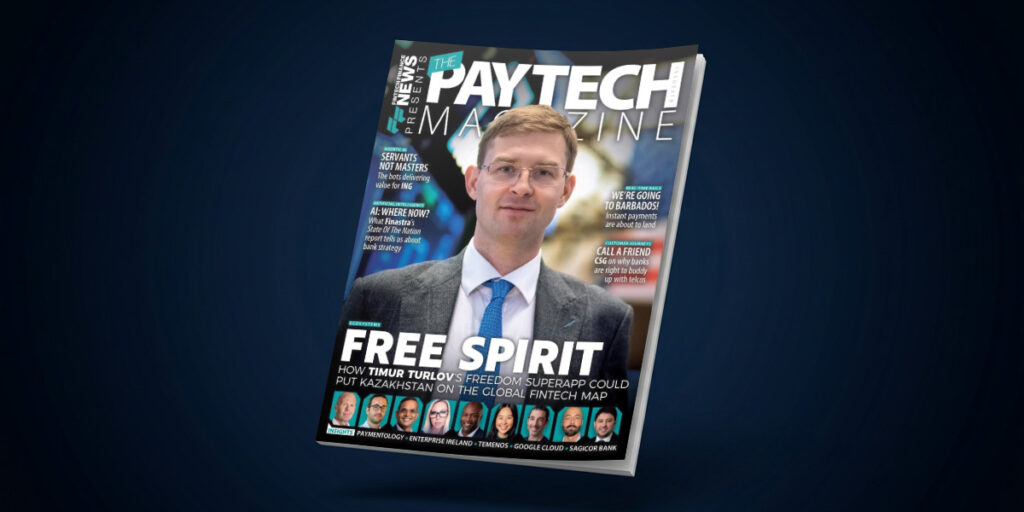 Freedom calling: Timur Turlov gave an interview to PAYTECH Mag...
 Freedom to acquire bank in Turkey and scale SuperApp to the tu...
 S&P Global Ratings Gives Positive Outlook to Freedom Hold...
 Freedom Holding Corp. total assets increased by 25% over nine ...
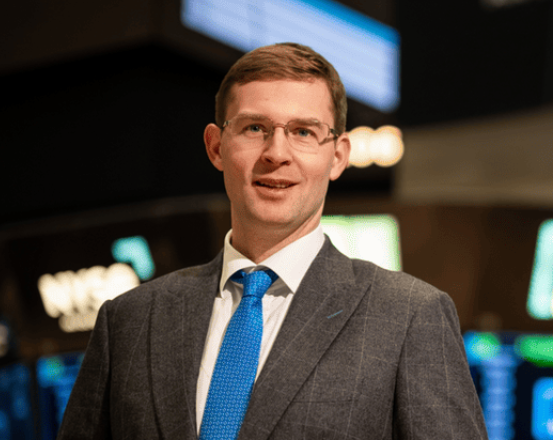 Bloomberg: Timur Turlov is weighing debt sales in dollars and ...