Bloomberg: Timur Turlov is weighing debt sales in dollars and the yuan to expand Freedom Holding Corp.

Timur Turlov is weighing debt sales in dollars and the yuan as his Freedom Holding Corp. expands to compete with Kazakhstan’s dominant financial players.
After developing the nation’s leading retail brokerage, Turlov bought a local bank, insurance companies and other firms to create an ecosystem that also encompasses ticket sales, an online movie platform with original content, grocery deliveries and mobile services. The tycoon is now debating whether Freedom Bank should issue debt itself or whether the Nasdaq-listed holding should do so, opening the way for more deals.
While the lender could sell bonds, it’s “absolutely not interesting” to borrow at a yield of 9% because it would be too expensive, Turlov said in an interview for Bloomberg. An alternative option could be a sale of bonds to US investors by the holding for about $300 million to $500 million, he said.
“We will have to build a reputation there and we understand that this is one for the long run,” Turlov said, adding that the company was prepared to pay a premium.
Retail lending and marketplace sales in Kazakhstan’s $300 billion economy are dominated by Kaspi.kz, whose only large rival is Halyk Bank, the nation’s biggest by assets. Freedom Bank is competing with both for retail customers, including via a start to online mortgage issuance. Clients are attracted by cashback offers and ticket sales to pop events, while Freedom pays cashback in digital coins bound to its shares through an Astana-registered ETN.
Following years of rapid growth, the holding had more than 5 million customers at the end of last March, according to the company. A mobile application, SuperApp, consolidates essential financial services into one platform, where monthly active users were about 1 million in March 2025, though it’s “still considerably smaller than the two leading financial ecosystems in Kazakhstan,” S&P Global Ratings said in a June report, raising the outlook on the group’s core subsidiaries to positive.
In the six months to March 31, double leverage — borrowing at the parent level to leverage investments in subsidiaries — at the holding increased to 167% from 135%, as the company continued to finance development of its telecommunications business through bonds issuance via a special purpose vehicle, S&P said. The group “substantially” cut holdings of government securities and recognized a loss from their negative revaluation, which saw the banking segment posting a loss for the financial year ended March 31, S&P said.
Freedom Holding’s US-traded shares are down roughly 35% from their August peak amid more stringent regulations by Kazakh authorities, including an increase in the minimal reserve requirements.
There are several banks for sale “in theory” in Kazakhstan, and the group could buy one at a bit less than a book price to later merge with it and get access to the customer base, especially corporate clients, according to Turlov. The lender must be no smaller than Freedom Bank, which has 2.5 trillion tenge ($5 billion) in assets and about $500 million in capital, he said.
“We may announce a purchase of a local marketplace soon,” as the group considers how to develop e-commerce, the chief executive officer said, declining to name the target.
The tycoon, who’s amassed a $5.3 billion fortune according to Bloomberg’s Billionaires Index, is also eying growth abroad via partnerships or purchases under the umbrella of Freedom Holding.
“I’m interested in proposing our Superapp product as a digital ecosystem on the US market, and we are looking to find the right ways,” he said. “We are thinking either to go ahead with a fintech license, or in partnership with a local bank,” he said, adding that getting a banking license directly or via the purchase of a lender is complicated by regulatory requirements.
The company most likely will try to sell its banking and brokerage products in the US and United Arab Emirates respectively via partnerships with local players. But after getting a brokerage license in Turkey, he said he’s looking to buy a lender there, with capital requirements for banks at about $300 million.
“There’s a huge number of banks who don’t meet these requirements,” he said.
Turlov isn’t restricting his interest only to the banking world and has plans to raise money to invest $200 million to $300 million in development of telecoms infrastructure and data centers. After signing an agreement to create a $2 billion hub powered by Nvidia Corp. infrastructure, Turlov said his company may initially spend as much as $100 million on chips for it.
The buildup aims to create data centers that will sell cloud services for such customers as Amazon and Microsoft, and will be helpful to sell services to clients ranging from governments to a customer seeking computing capacity by buying it at a bourse.
To get there, Turlov is investing in building infrastructure to connect Europe and China, a country with which Kazakhstan is cementing ties.
The group has also held non-deal road shows in Hong Kong and is working on a potential sale of Dim Sum bonds, denominated in Chinese yuan, Turlov said.
“There may be some opportunities as, of course, it’s the most attractive currency for borrowing,” he said.
Other news
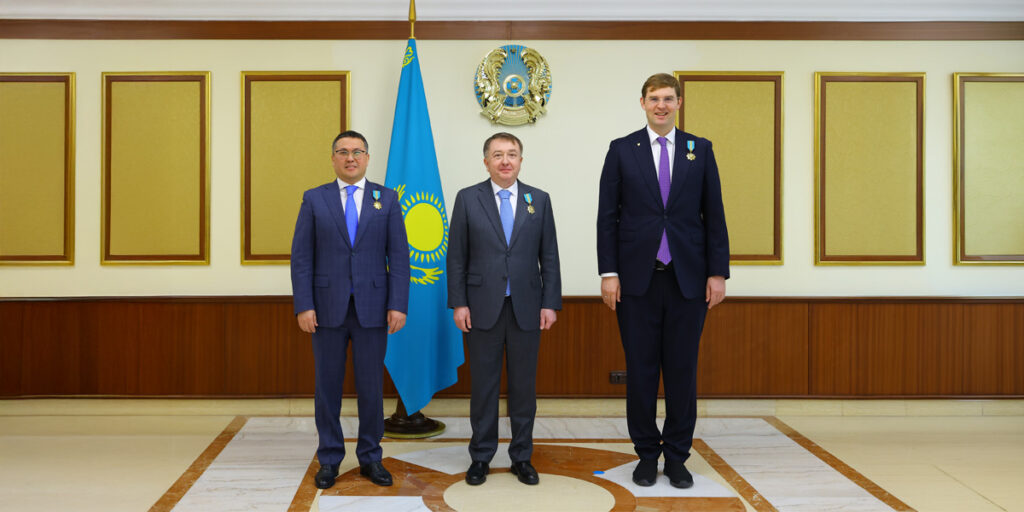 Timur Turlov Awarded the “Parasat” Order on Behalf of the Pres...
 Moody’s assigns stable ratings to Freedom Bank...
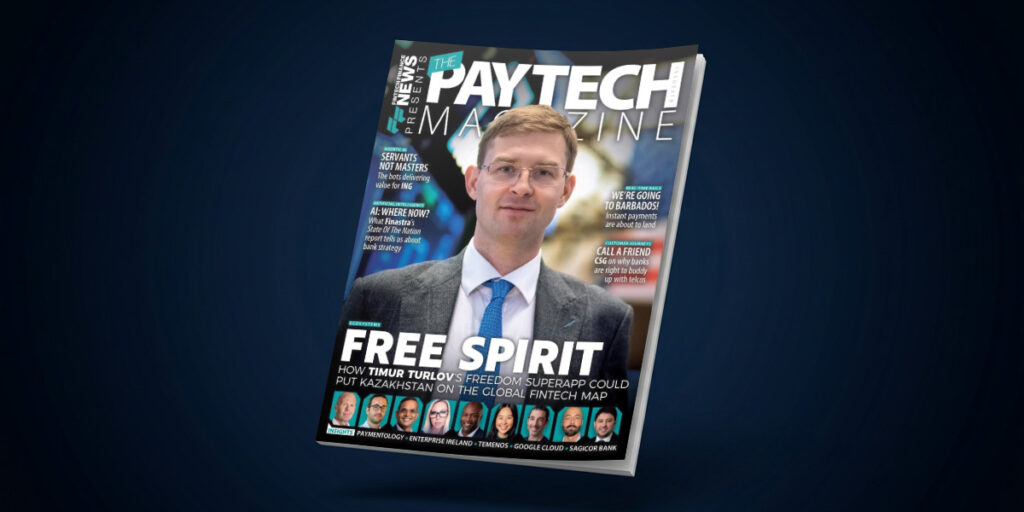 Freedom calling: Timur Turlov gave an interview to PAYTECH Mag...
 Freedom to acquire bank in Turkey and scale SuperApp to the tu...
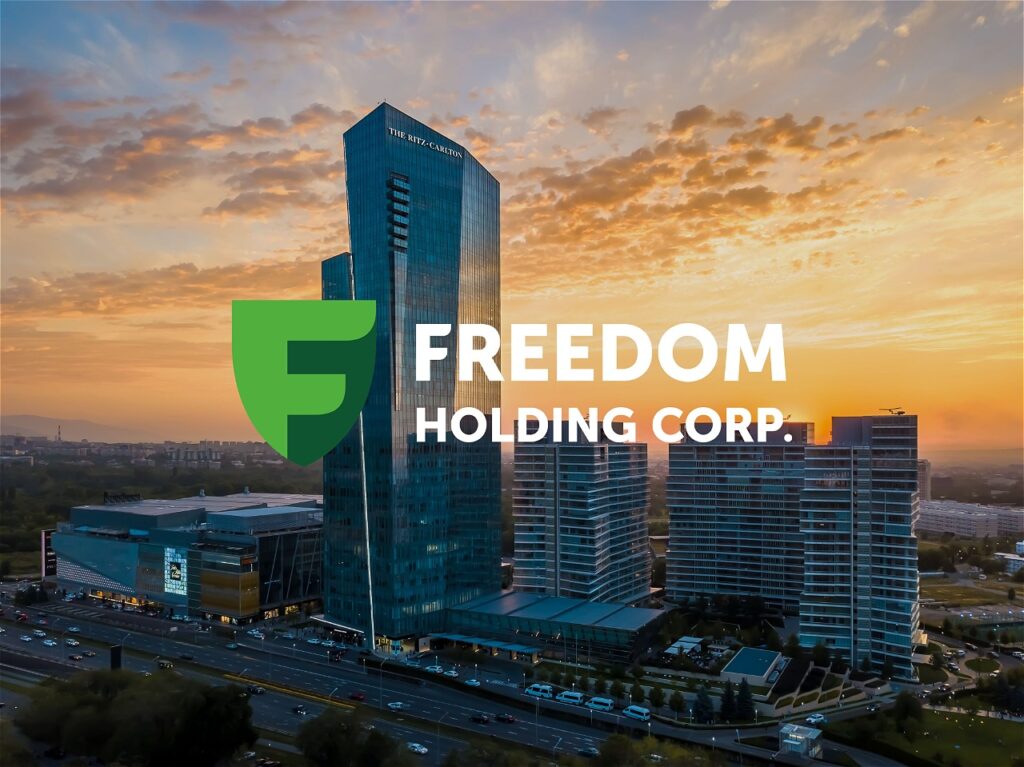 S&P Global Ratings Gives Positive Outlook to Freedom Hold...
 Freedom Holding Corp. total assets increased by 25% over nine ...
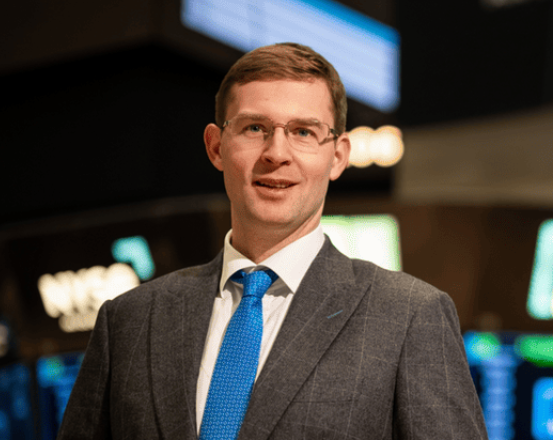 Bloomberg: Timur Turlov is weighing debt sales in dollars and ...
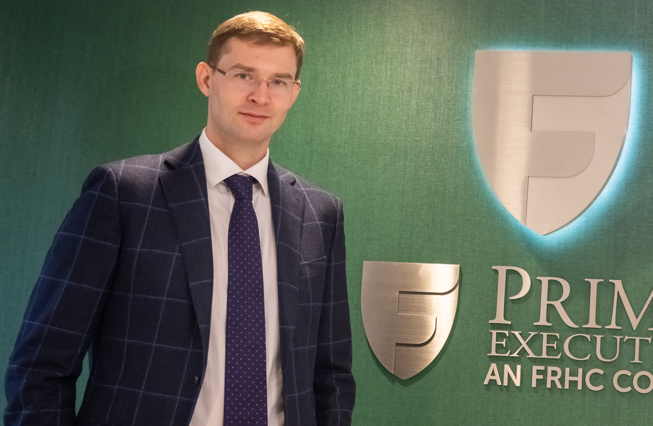 Freedom Holding considers HK share offering as part of growth ...