Freedom calling: Timur Turlov gave an interview to PAYTECH Magazine
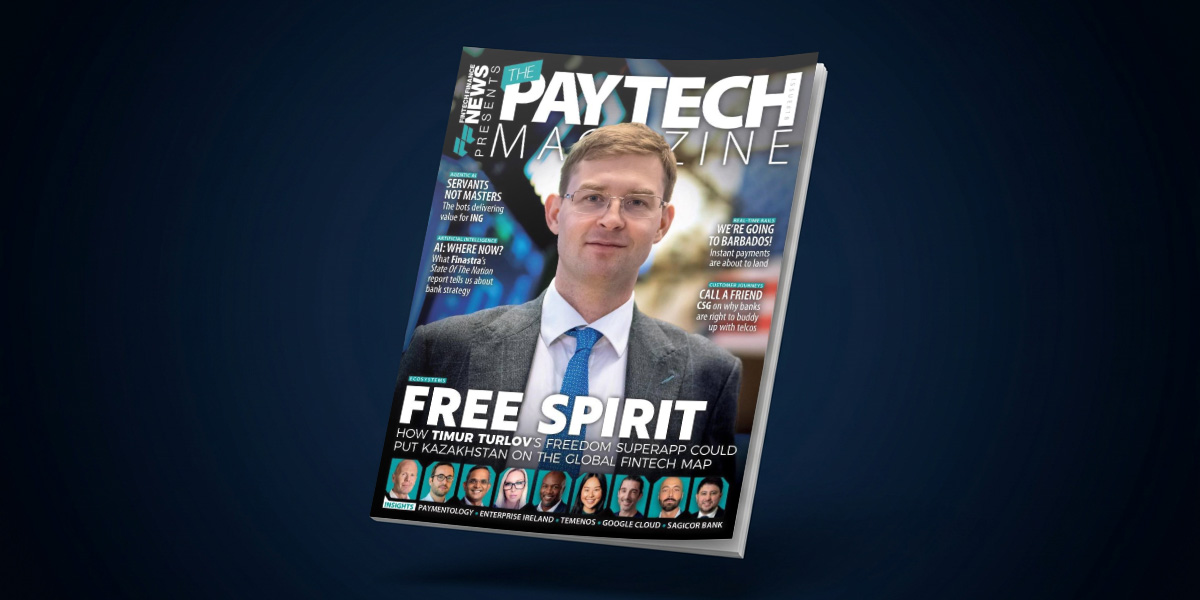
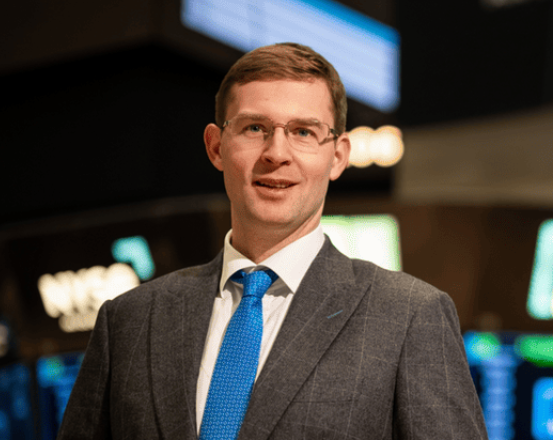
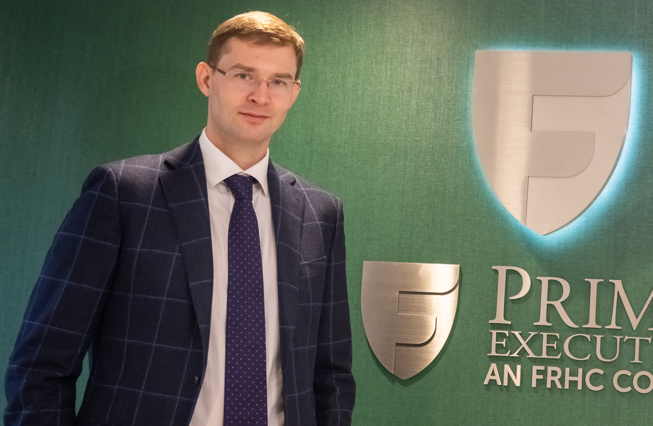
Timur Turlov, CEO of Freedom Holding Corp., gave an interview to PAYTECH Magazine, an international fintech publication. Turlov is building a financial ecosystem in Kazakhstan that could become a blueprint not only for Central Asia, but for global expansion. In this special Q&A, the Founder of Freedom Holding Corp. explains the logic behind the superapp strategy and why his door is open to hyperscalers.
— Can you give us a snapshot of the company’s growth path and where it is now?
We started in late 2010 with a simple idea – to give people in Eastern Europe and Central Asia access to the US stock market. At some point, we realised that we were good at building technology, so we began expanding into adjacent services – including insurance, which remains significantly less digitalised than brokerage. At the same time, digital banks started competing directly with brokers. If we wanted to remain independent and continue growing, we had to evolve into a digital bank ourselves. That led to the launch of Freedom Bank in Kazakhstan – which became the foundation of our ecosystem. From there, we continued expanding into telecommunications, e-commerce and other digital services – all designed to work together within one integrated platform. What began as a brokerage company eventually evolved into Freedom Holding Corp., a US-based public company listed on NASDAQ.
In 2024, we launched the Freedom SuperApp. Today, customers can manage their finances, invest, make payments, buy tickets for concerts or football matches, arrange travel, or even watch movies – all within a single interface. It’s not just a financial app – it’s a true superapp, a full digital ecosystem designed to simplify everyday life.
— The Freedom SuperApp has rapidly evolved into one of the most advanced multi-vertical ecosystems in the region. What was the thinking behind it?
Different services solve different problems. Some can acquire customers very cheaply, but struggle with retention. Others – like insurance or investments – are harder and more expensive to scale, but create long-term engagement. Banks, however, remain among the most trusted institutions. That makes it easier to introduce more complex services to existing customers. Within our ecosystem, different services complement each other. For example, payments become much smoother if a customer already holds an account with Freedom Bank. If we already have customer data, it becomes significantly easier to offer additional services – like booking airline tickets – without forcing users to leave the platform. Instead of switching between multiple apps, customers can simply open their banking app, click a button and complete the transaction. It’s faster, more convenient, and often cheaper. At the same time, customers benefit from everyday savings through our loyalty programme and cashback mechanics, which create a more engaging experience. Some services drive direct revenue. Others improve retention. Others build trust. But together, they create a stronger ecosystem effect.
— Kazakhstan isn’t typically seen as a global fintech hub. What makes it a strong environment for building a platform of this scale?
First of all, we have a large pool of well-educated people. The majority of our 10,000 employees speak English. Kazakhstan also has a relatively young population and higher GDP per capita than many neighbouring markets. Both the population and the government are highly tech-optimistic. We adopt new technologies very quickly, and that rapid adoption creates a unique environment – essentially a sandbox – within a market of around 20 million people. At the same time, the cost of doing business and R&D here is significantly lower. When costs are lower, you’re less afraid to experiment – and to make mistakes. Right now, we are actively working on deploying AI across our ecosystem to create a more seamless and intelligent user experience. I believe that by combining AI technologies with open-source solutions, we can build systems that simplify everyday life – delivering services that were previously only accessible through large corporations. Yes, this is a blueprint. I don’t just want to build one of the most advanced ecosystems in my country – I want to build it at a regional level first, and then globally. That’s why we are expanding into Europe with our brokerage services. That’s why we are entering markets like Georgia and Tajikistan. We are also moving into Turkey and strengthening our presence in the United States. Ultimately, our success will depend on how many countries we are able to serve – because competition is already becoming regional and global.
— Freedom Holding Corp has recently announced major AI initiatives – including a partnership with OpenAI and a $2 billion sovereign AI wealth hub with Nvidia. How important could Kazakhstan become in the global AI landscape?
If you look at the map of hyperscaler data centres across Eurasia, there is almost nothing between Poland and South Korea. That gap is exactly why we had to start building our own infrastructure. We cannot rely on external providers if they simply aren’t present in the region. At the same time, we are open to cooperation. We want to work with hyperscalers and allow them to serve the broader macro-region through Kazakhstan. AI training itself is a global market. Compute power can be exchanged across borders, and demand already exceeds supply – more people need compute than is currently available.
“I believe I still can do something good for my customers, for my country, for other countries. I can create something meaningful.”
— Timur Turlov
Kazakhstan also has several structural advantages: a stable political environment, growing FDI inflows, an investment-grade credit rating, no capital movement restrictions and a favourable tax regime. Energy costs are still relatively low, which creates strong potential to build a regional AI hub serving all of Central Asia.
— Traditional financial institutions still operate within narrow verticals. What advantage does a unified digital ecosystem give you?
Large banks are powerful – but they can also be inefficient. Scale creates trust, but it also creates inertia. Legacy systems help established players move forward, but at the same time they limit flexibility. That creates space for new models – and even for rethinking the entire sector. The key advantage of digital banks is cost efficiency. We can deliver services significantly cheaper.
While it takes time to reach the scale of traditional banks, growth can happen very quickly – as we’ve seen in Kazakhstan. Before 2020, around 80% of payments were made in cash. Today, that number is closer to 12%. If you build the right product, customers will eventually recognise its value. At the same time, the financial sector itself becomes more efficient – requiring fewer resources to facilitate transactions. That reduces costs for customers and allows them to use their money more productively. In the long term, the financial sector may even shrink as a share of GDP.
— What role do you see Freedom playing in the future of global financial services? And what about growth potential in the US?
We already operate a licensed broker-dealer in the US, providing market research and institutional investment services. This gives us a solid foundation for further expansion. If you look closely at Freedom, you will see that we effectively have dozens of potential unicorns within the group – across different subsidiaries and product lines: core banking systems, card processing, payments, buy-now-pay-later solutions and more. These solutions can be scaled and exported to other markets. For example, the cost of originating a mortgage in the US now exceeds $10,500.
In Kazakhstan, the same process costs around $200. That difference clearly shows how much efficiency technology can bring to financial services. Some functions – like accounting or parts of credit decision-making – can be outsourced. But technology must remain in-house. A digital bank – and especially a digital ecosystem – is fundamentally a technology company. Its real assets are its technology and the people who build it.
— You’ve built a highly successful company with millions of customers. Why not step back and enjoy the success?
I believe that a person can only be truly happy if they are contributing something – if they create more than they take from society. I still believe I can do something meaningful – for my customers, for my country, for other countries. I want to keep competing for as long as I can in this fast-changing global industry. It’s very hard for me to imagine simply finishing my career. That would be boring.
Other news
 Freedom calling: Timur Turlov gave an interview to PAYTECH Mag...
 Freedom to acquire bank in Turkey and scale SuperApp to the tu...
 S&P Global Ratings Gives Positive Outlook to Freedom Hold...
 Freedom Holding Corp. total assets increased by 25% over nine ...
 Bloomberg: Timur Turlov is weighing debt sales in dollars and ...
 Freedom Holding considers HK share offering as part of growth ...
 Freedom Holding’s Dip Is A Buying Opportunity...
 Freedom Telecom: Building the Rails of a Fully Integrated Digi...