Timur Turlov Joins International Council for the Development of Business Education
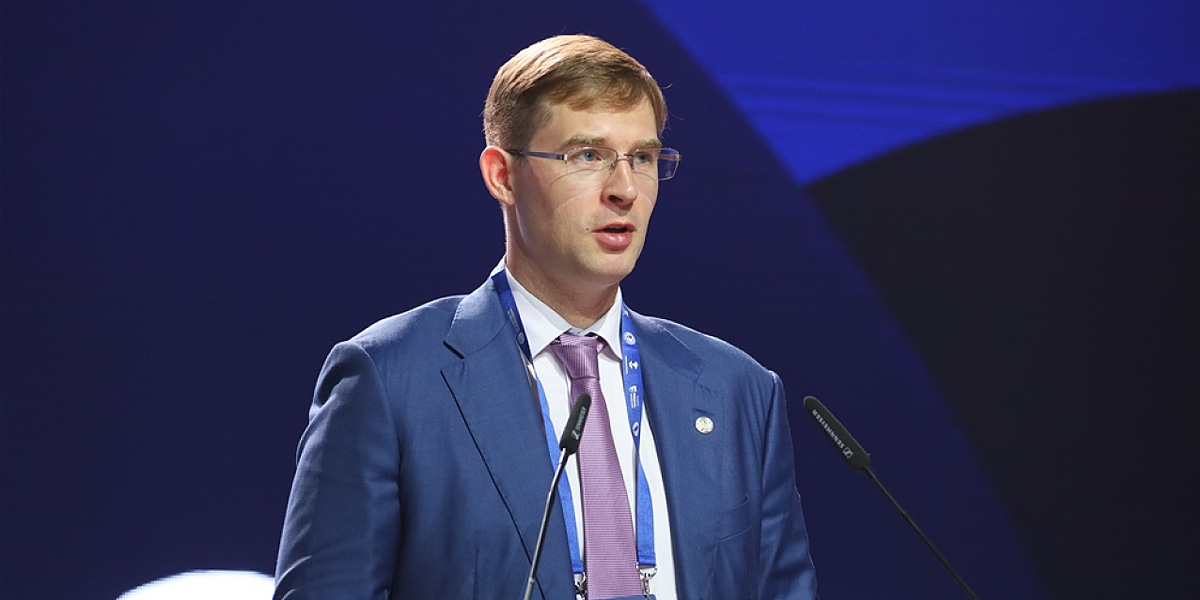
Timur Turlov, CEO of Freedom Holding Corp., has joined the Academic Council of the international consulting company AWE Consulting. Together with professors from Stanford and Harvard, as well as the authors of modern management concepts, he will contribute to developing new approaches to business education and preparing the next generation of leaders.
The main goal of the partnership is to bridge the gap between academic theory and practice and to integrate the experience of rapidly developing markets into the educational programs of the world’s leading universities.
A New Approach to Business Education
AWE Consulting works with government institutions, universities, and international companies to promote the “People. Purpose. Planet.” management model. The model is based on the idea that sustainable business development is impossible without creating value for society, while financial performance becomes the result of addressing meaningful social challenges.
According to Philip Kotler, Professor of International Marketing at the Kellogg School of Management, modern business education must move beyond exclusively Western management models and take into account the successful experience of other regions, including Central Asia. This is precisely the task of the Academic Council, which brings together scholars and executives from international companies.
Gabriele Carboni, co-author of the Enlightened Management concept, noted that Timur Turlov’s appointment to the Academic Council is an example of the practical application of enlightened management principles.
“Through the ‘People. Purpose. Planet.’ model, we emphasize that technological innovations create genuine value when they are guided by a clear purpose and place people at the center. Freedom Holding’s experience demonstrates that digitalization can go beyond operational efficiency and create new levels of trust, transparency, and institutional value for society,” Carboni said.
Bridging the Gap Between Knowledge and Practice
One of the Academic Council’s key objectives will be to address the Knowing–Doing Gap — the divide between academic knowledge and its practical application. The project brings together representatives of academia, business, and the public sector to develop educational programs based on real-world management experience.
Tata Cholaria, President of AWE Consulting, notes that many countries and companies possess unique practices. However, unless these practices are systematized and integrated into the educational environment, the knowledge remains confined within individual organizations.
William Ellet, an international expert in the case method, emphasizes that effective business education is impossible without analyzing real management situations in which there is no single correct solution. Working with such cases helps future leaders develop the ability to make decisions in conditions of high uncertainty.
Commenting on his participation in the Academic Council, Timur Turlov noted that modern technologies require a new approach to education.
“We decided to join the project because we understand the power of technology and, at the same time, recognize how important it is to adapt education to the new reality. Artificial intelligence is changing the learning process itself, but the key question is how to transform unique practical experience into knowledge that will be relevant around the world. Today, we know for certain that Kazakhstan’s intellectual capital is of interest far beyond our country. I see my mission on the Academic Council as helping to transform this experience into knowledge of global significance,” said the CEO of Freedom Holding Corp.
Education and Philanthropy as Part of the Strategy
Freedom Holding Corp. invests billions of tenge each year in education and socially significant initiatives. The holding company’s philanthropic projects cover education, healthcare, sports, environmental protection, and social support and are implemented through the Freedom Shapagat Foundation.
One of its largest educational initiatives is a strategic agreement with OpenAI and the Government of Kazakhstan to introduce ChatGPT Edu. As part of the project, Freedom Holding is financing 165,000 licenses for teachers at schools, colleges, and universities over a three-year period. This has made Kazakhstan one of the first countries to introduce an educational version of artificial intelligence at the national level.
The holding company also invests in the development of modern educational infrastructure. With Freedom’s support, specialized facilities for training young professionals are being opened, including the Artificial Intelligence Center at SDU University. The company is also implementing projects aimed at developing private education and creating a modern learning environment.
Chess development holds a special place in the company’s social strategy. Freedom Holding is the general partner of the Kazakhstan Chess Federation and the International School Chess Federation, or ISCF. It supports international competitions and programs aimed at integrating chess into school education. The company views chess as a tool for developing critical thinking, logic, and leadership skills among children and young people.
In addition to its educational initiatives, the holding company implements large-scale healthcare projects, supports environmental programs, assists people affected by emergencies, and contributes to the development of sports infrastructure. This comprehensive approach reflects Freedom Holding’s long-term strategy of developing human capital and creating sustainable value for society.
Other news
 From First Investments to Nasdaq: How Timur Turlov Built His F...
 Timur Turlov Meets with NIS Students in Almaty to Discuss Lead...
 President Tokayev Congratulates Timur Turlov on His Election a...
 Timur Turlov: Freedom Is Developing an AI Assistant for Custom...
 “Armenia Can Become a Bridge Between Europe and Central Asia” ...
 Timur Turlov elected FIDE president: what he plans to change i...
 Timur Turlov spoke to ChessBase about what chess teaches us – ...
 FIDE Presidential Election in Samarkand: Timur Turlov’s Campai...