“Kazakhstan Will Diversify Its Economy Amid an Influx of Investment” — Timur Turlov

Kazakhstan is approaching an important stage in its development, when international investors will no longer be able to ignore the country’s capital market, said Timur Turlov, founder of Freedom Holding Corp. Central Asia’s largest economy is already moving beyond its traditional commodity-based investment profile and expanding the role of financial, technology, and infrastructure projects.
Kazakhstan’s growth will be accompanied by further diversification of the economy and a broader range of sectors attracting capital, according to the founder of Freedom Holding Corp. He believes this process will be supported by foreign direct and portfolio investment, the development of the capital market, government demand, and favorable conditions in commodity markets.
Turlov spoke about this in Astana during the ITS IDEAS 2026: Markets in Motion panel session held as part of Astana Finance Days. The international financial forum is held annually by the Astana International Financial Centre in Astana. It brings together investors, financial-sector representatives, businesses, and regulators to discuss capital-market development, fintech, digital assets, investment, and other major trends shaping the financial industry.
Diversification Will Be a Long-Term Process
Sustainable economic growth in Kazakhstan is impossible without further expansion of the economy beyond its traditional sectors, Turlov believes.
“In my view, Kazakhstan’s economy is practically destined to grow faster than many other economies. And it is difficult to imagine such growth without further diversification,” he said.
According to the businessman, diversification will progress alongside growth in GDP per capita. Turlov expects Kazakhstan to become a regional leader by this measure. Rising prosperity, in turn, will be accompanied by the development of financial services, technology, digital infrastructure, and other more sophisticated business sectors.
The government will also retain its role as a major investor and continue to support domestic investment demand. Diversification, therefore, should not be viewed as a temporary response to geopolitical developments, but rather as a long-term process linked to the overall evolution of the economy.
A Self-Reinforcing Cycle
Turlov identified a favorable environment for foreign direct investment as one of the main drivers of diversification. Kazakhstan’s strong political and economic relations with key partners facilitate the launch of new projects, while investments that have already been implemented make the country more attractive to the next wave of investors, he said.
This view is already supported by data from the National Bank of Kazakhstan: as of April 1, 2026, the stock of direct investment in the country reached a record $161.594 billion, up 3.3% from both the beginning of the year and the same period a year earlier.
Turlov expects capital inflows from China, the United States, European countries, Russia, and other Central Asian states to continue. International debt markets are also becoming an increasingly important source of financing, as the government, quasi-sovereign companies, and major holdings step up their borrowing activity.
Following the 2007–2008 financial crisis, Kazakh banks spent around 15 years with limited access to external borrowing, while industrial companies attracted relatively modest amounts of financing and the government barely tapped international markets. The situation is now changing: Kazakh borrowers are able to raise external funding on more attractive terms than are available domestically, while sovereign risk premiums on dollar- and yuan-denominated borrowing are at record lows, Turlov noted.
Commodity Market Conditions
The transition toward a more sophisticated economy does not mean the commodity sector will become less important. On the contrary, favorable conditions in commodity markets provide Kazakhstan with additional resources for investment.
Turlov pointed to oil prices, which could average more than $80 per barrel over the year, as well as a nearly 40% increase in copper prices over the past several years. Gold, nickel, and uranium are also providing support to the economy.
In his view, the decline in real output in the extractive sector is temporary rather than structural. A recovery in mining should support faster GDP growth and stronger domestic investment demand.
The Capital Market Is Becoming Harder to Ignore
Turlov also considers the development of Kazakhstan’s capital market to be another important condition for economic diversification. Its size has already reached tens of billions of dollars and continues to grow.
“We are very close to the point where our market becomes difficult to ignore,” the entrepreneur said.
The market’s expansion depends not only on the introduction of new securities but also on stronger domestic investment demand. Turlov cited KazMunayGas as an example: the company’s market capitalization amounts to tens of billions of dollars, yet only a few percent of its shares are in free float, with a value of roughly $1 billion.
In theory, KazMunayGas’s free float could be increased to $10 billion, Turlov said. However, placing such a volume of shares would require large institutional investors. Pension reform, broader access to competitive management of pension assets, and the development of other sources of long-term capital could help support this process.
More Sophisticated Industries
Kazakhstan’s investment profile is gradually moving beyond commodity assets and traditional industries. Foreign investors are increasingly considering financial services, IT, digital infrastructure, artificial intelligence, and other technology-intensive sectors.
“We have definitely moved past the stage where investors were prepared to buy only commodities and simple industries, and have transitioned toward much more sophisticated sectors,” Turlov emphasized.
In the future, investors may begin to view Central Asia as a single investment thesis and allocate capital to index funds that include companies from across the region. To make this possible, Turlov believes the market must continue to strengthen trust, improve infrastructure, and raise corporate governance standards.
He assessed the corporate governance standards of Kazakhstan’s largest corporations and quasi-sovereign companies at around 7 out of 10. Further improvements should be driven by foreign portfolio investors and domestic institutional investors.
Investment in the Digital Sector Is Accelerating
Official statistics also confirm the rise in capital investment in technology-related sectors. In the first half of 2026, fixed-capital investment in information and communications reached 281.7 billion tenge, up 71.8% year over year. The sector accounted for 2.5% of all capital investment in the country.
Kazakhstan’s exports of IT services approached $1.142 billion in 2025. Compared with $33.5 million in 2020, the figure increased almost 34-fold.
The development of artificial intelligence will require further investment in data centers, energy infrastructure, cloud services, and telecommunications. Agreements worth 800 billion tenge have already been signed with investors for the construction and operation of data centers, while Kazakhstan plans to launch at least ten major data centers by 2030.
According to Turlov, the growth of the capital market, continued inflows of foreign investment, and increasing investment in digital infrastructure will support Kazakhstan’s transition toward a more sophisticated and diversified economy.
Other news
 From First Investments to Nasdaq: How Timur Turlov Built His F...
 Timur Turlov: “Chess Has Every Chance of Becoming as Popular a...
 From Travel to Groceries: How Freedom Holding Corp.’s Lifestyl...
 Freedom Holding Corp. Marks Seven Years Since Its Nasdaq Listi...
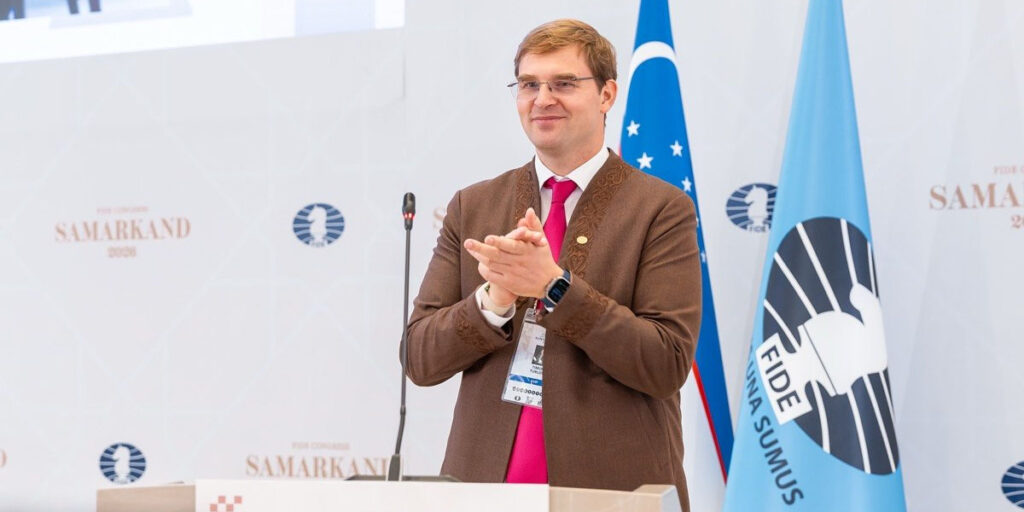 Timur Turlov Meets with NIS Students in Almaty to Discuss Lead...
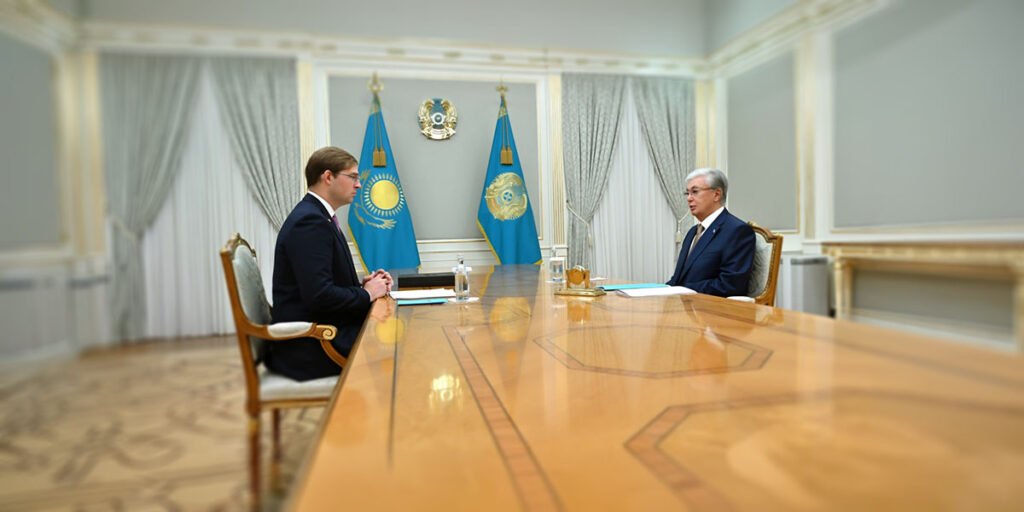 President Tokayev Congratulates Timur Turlov on His Election a...
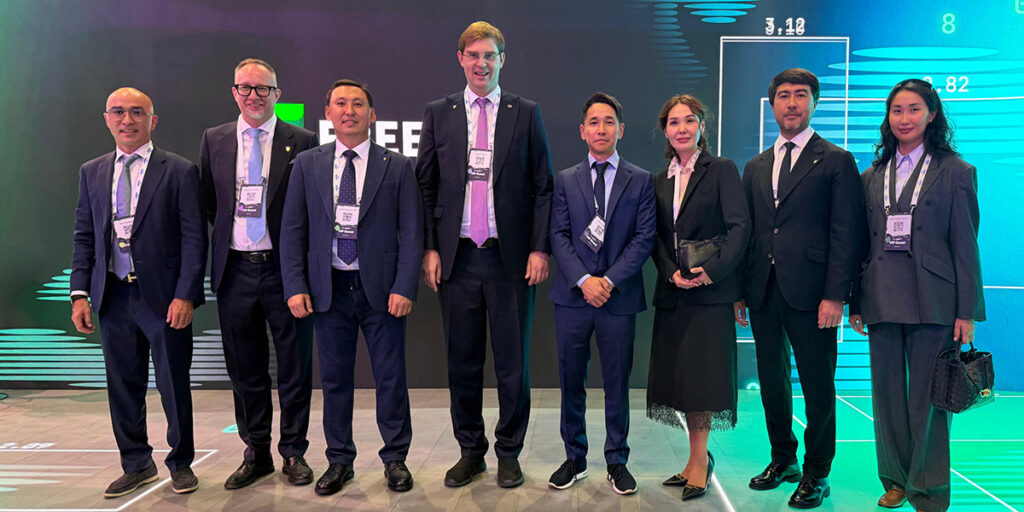 Timur Turlov: Freedom Is Developing an AI Assistant for Custom...
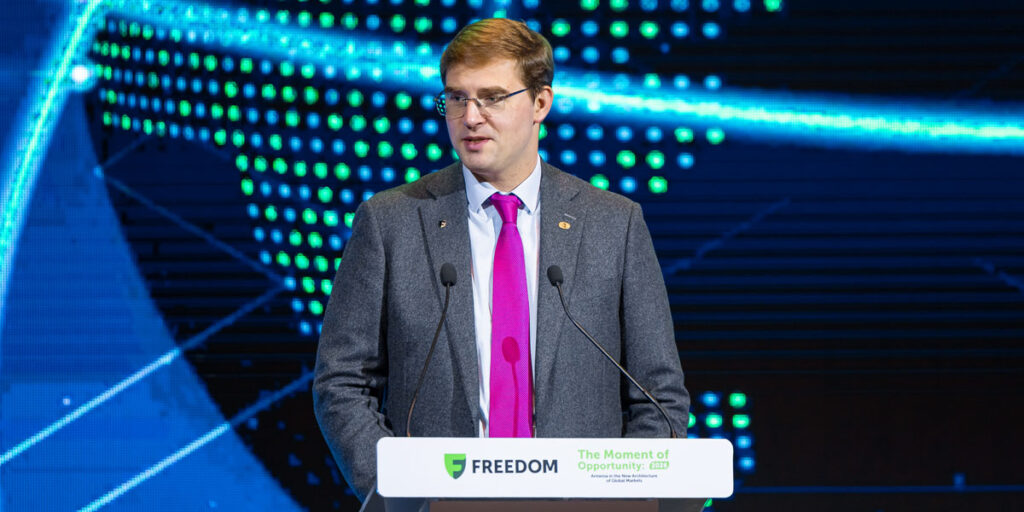 “Armenia Can Become a Bridge Between Europe and Central Asia” ...