Timur Turlov on How the State and Digital Ecosystems Interact in Kazakhstan
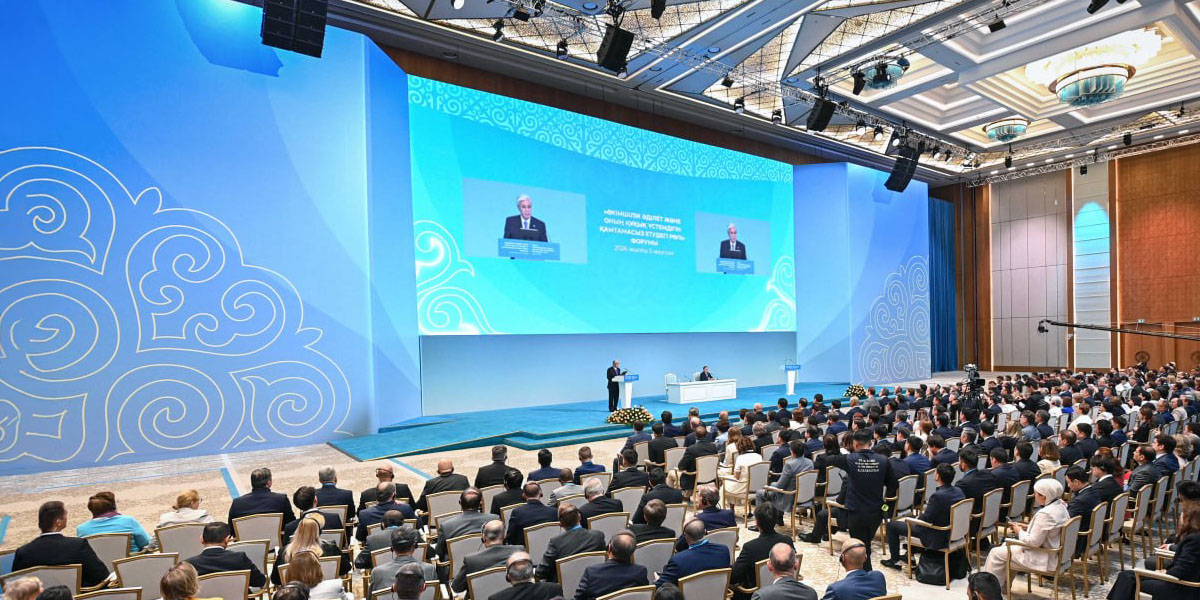
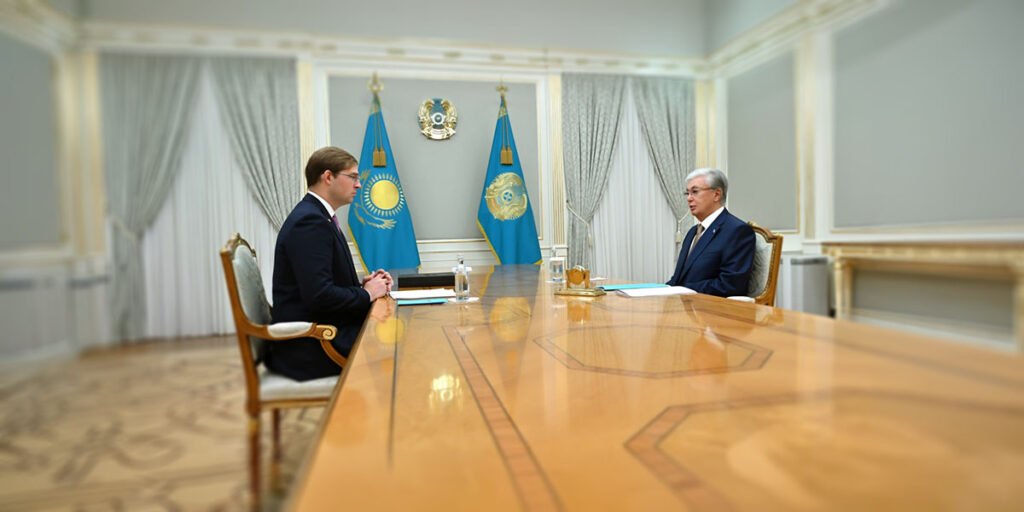
The model of cooperation between the state and digital ecosystems in Kazakhstan is among the most successful in the world, according to Timur Turlov, founder of the Freedom fintech ecosystem. Speaking at the international forum “Administrative Justice and Its Role in Ensuring the Rule of Law”, attended by President Kassym-Jomart Tokayev, Turlov said that the government sets the framework and strategic direction, while digital ecosystems help fill those frameworks with practical, everyday services for citizens.
Equal Opportunities for All
In his address, President Kassym-Jomart Tokayev emphasized that major reforms in Kazakhstan’s judicial and law enforcement systems are being implemented alongside the country’s economic transformation. According to the President, these reforms stimulate business activity and create a favorable institutional environment, including mechanisms for resolving investment disputes.
“As a result, up to 80% of court decisions are now made in favor of investors. During meetings with both domestic and foreign investors, I consistently stress that government and business must engage constructively, openly discuss current challenges, and jointly seek solutions. I instruct public officials to pursue compromise in any disputed situation, provided that such solutions remain within the framework of the law. In other words, every agreement must comply with the legal system,” Tokayev said.
The President noted that several institutions have been established to support this effort. These include the Court and International Arbitration Centre of the Astana International Financial Centre (AIFC), which operate under the principles of English common law; the Investment Headquarters under the Government; and the Committee for the Protection of Investors’ Rights under the Prosecutor General’s Office.
“As a state committed to improving the business and investment climate, we maintain strict oversight of this area. Kazakhstan currently leads the region in attracting foreign investment. However, there is no room for complacency. We must continue working diligently and strive for even more ambitious goals. Our country has sufficient potential to achieve them,” Tokayev said.
The President also reiterated that the government remains open to mutually beneficial cooperation with the business community.
“We are carrying out large-scale reforms aimed at building a Fair Kazakhstan, where the principles of Law and Order prevail and equal opportunities are available to all. That is why we place particular emphasis on ensuring the independence of the judiciary,” he added.
Representatives of the business community attending the forum also highlighted the importance of the reforms taking place in the country. Timur Turlov, founder and CEO of Freedom Holding Corp., described the introduction of administrative justice as the highest expression of state responsibility. He noted that Kazakhstan has developed a level of institutional stability that allows businesses to operate with greater confidence than in many other countries, despite the uncertainty of the modern era.
“Freedom Holding probably feels this more than most. Through our daily operations, we see how Kazakhstan’s regulatory environment is becoming increasingly mature. We also understand the value of the effort required to achieve this. Such stability never emerges on its own—it is the result of long-term, systematic work by the state,” Turlov said.
Turlov also praised the government’s technological optimism and its willingness to replace bureaucratic practices with digital solutions.
“Recently, the Head of State articulated a very important principle: digitalization and bureaucracy are incompatible, like ice and fire. Technology should not adapt to outdated administrative practices – it should transform them in the interests of citizens and the country,” he said.
According to Turlov, Kazakhstan’s government has played a crucial role in enabling the development of digital ecosystems.
“Alongside the state, and within the same broader logic, another phenomenon has emerged and become an important part of our daily lives – digital ecosystems through which millions of interactions take place every day. They neither replace the state nor compete with it for influence. An ecosystem becomes a natural element of the environment that the state itself creates. The government sets the framework and strategic horizon, while ecosystems help fill those frameworks with practical, everyday content,” Turlov said.
Freedom Ecosystem: 14 Million Users and Growing Share Value
Today, the Freedom fintech ecosystem consists of dozens of services. Most of them are integrated into Freedom SuperApp, which has more than five million users and regularly ranks among the most downloaded applications in both the App Store and Google Play. Across the entire ecosystem – including partner companies and international businesses within Freedom Holding Corp. – the total client base now exceeds 14 million users.
At the core of Freedom SuperApp is a banking platform integrated with brokerage services. The app also offers a range of lifestyle services, including grocery delivery, travel bookings, and event ticket purchases. Additional features include insurance services, an electronics marketplace, a telecommunications and internet provider, a home-services marketplace for plumbers and electricians, and even tire sales, including products manufactured by Freedom itself.
The ecosystem also includes a media-services cluster integrated into the SuperApp. This consists of a proprietary streaming platform featuring movies and TV series, some of which are produced by Freedom; SuperJournal, a digital publication offering news and feature articles; and the recently launched social platform Freedom Lenta, where company executives maintain personal blogs.
In addition, Freedom has integrated a range of government services into the application. Users can access digital identity documents and vehicle documents, pay fines, taxes, government fees, and mandatory health insurance contributions, register or change their place of residence, obtain certificates from government agencies and healthcare institutions, submit asset declarations, and register as sole proprietors. The DTP.kz service allows drivers to file accident reports under the European Accident Statement procedure without police involvement. A recently launched “My Health” section enables users to schedule medical appointments and store records of their health examinations.
How Ecosystems Generate Revenue: Freedom’s Financial Results
Freedom Holding Corp. recently published its financial results for fiscal year 2026.
Net income more than doubled year-over-year, reaching $153.3 million compared with $76.2 million in the previous fiscal year. Revenue totaled $2.19 billion. Since the company’s NASDAQ listing in 2019, revenue has increased more than 26-fold.
Total assets grew by 33% to $13.16 billion, compared with $9.92 billion a year earlier. Basic earnings per share reached $2.56.
The number of clients in Freedom’s brokerage segment increased by 26% to 858,000. In the banking segment, the client base exceeded five million, doubling year-over-year, while the insurance business reached 1.1 million customers. User numbers across the company’s other business segments grew by 83%.
Other news
 From First Investments to Nasdaq: How Timur Turlov Built His F...
 Freedom Holding Corp. Marks Seven Years Since Its Nasdaq Listi...
 Timur Turlov Meets with NIS Students in Almaty to Discuss Lead...
 President Tokayev Congratulates Timur Turlov on His Election a...
 Timur Turlov: Freedom Is Developing an AI Assistant for Custom...
 “Armenia Can Become a Bridge Between Europe and Central Asia” ...
 Timur Turlov elected FIDE president: what he plans to change i...
 Timur Turlov spoke to ChessBase about what chess teaches us – ...