How Freedom24 Is Building Its Own Ecosystem in Europe
The European division of Freedom Holding Corp. is preparing for a new stage of growth. Over the past few years, the company has become one of the European Union’s largest retail brokers and is now building a full-scale financial ecosystem that combines investment, banking, and other digital services on a single technological platform. This was discussed by the Freedom24’s CEO, Evgenii Tiapkin, in an interview with Finance Magnates.
More Than Just a Broker
According to Tiapkin, the brokerage business remains the foundation of Freedom’s European strategy, but Freedom24 has already moved beyond the traditional online broker model.
“We do not see ourselves as a neobroker focused solely on low-cost trade execution, nor are we a traditional broker dependent on outdated infrastructure,” Tiapkin noted.
Today, Freedom24 serves more than 600,000 clients across all countries of the European Union and the European Economic Area through its proprietary Tradernet trading platform.
Unlike many fintech projects, Freedom maintains a physical presence in European markets: local offices and teams operate in ten European countries, where employees provide clients with investment support and консультации.
Freedom24 CEO believes that the combination of digital technologies and local presence is what helps build trust among investors across different markets.
What Europe’s Fintech Market Could Look Like
One of the key reference points for Freedom’s European business is the experience of the Freedom SuperApp, which already operates in Central Asia. The app combines banking services, payments, investments, insurance, government services, ticket purchases, travel bookings, and other digital products within a single ecosystem. Today, its audience exceeds 5.5 million users.
The company believes that the European market is gradually moving toward a similar model. At present, banking, investment, insurance, and payment services in Europe still largely exist as separate market segments. However, users increasingly expect to access multiple services through a single digital interface.
“The challenge is no longer about technology. The real task is building the right operational foundation and trust required for this level of integration,” Tiapkin emphasized.
In his view, the platforms capable of integrating various financial services within a unified infrastructure will shape the future of the European market in the coming years.
Why Proprietary Technology Matters
Freedom24 is also actively developing its own technological infrastructure. The company fully controls the Tradernet platform and independently develops its core digital solutions. This approach allows it to launch new services faster, manage data more efficiently, and avoid dependence on third-party technology providers.
Another major focus area is the automation of regulatory processes. The company has developed Neo Compliance, a system that uses artificial intelligence to verify documents, analyze the source of funds, and monitor client transactions.
According to Freedom24, the system can process documents from more than 80 countries and complete complex compliance checks within minutes. Importantly, artificial intelligence performs the analytical work, while final decisions are still made by compliance officers. CEO Freedom24 Evgenii Tiapkin believes that such solutions make it possible to scale financial businesses without proportional growth in operating costs.
The European Footprint
Today, Freedom’s European network covers Cyprus, Germany, France, Spain, Italy, the Netherlands, Poland, Lithuania, Greece, and Bulgaria. The company also plans to expand into Portugal, the Czech Republic, Hungary, and Romania.
The largest project in Europe in the near future will be the development of a bank in France. The company has already submitted documents to obtain a banking license there.
Freedom Holding Corp. plans to invest around €500 million into the French market over the next five years to develop a digital bank and technological infrastructure. For the company, France is one of the key markets for further expansion within the European Union. The bank is expected to become the core infrastructure element around which investment, payment, insurance, and other digital services can later be developed.
Business Growth
By the end of 2025, Freedom Finance Europe’s net commission income reached $368.9 million, compared to $190.4 million just two years earlier.
Net profit over the same period more than doubled, rising from $120.7 million to $252.7 million. Profit before tax increased from $139 million to $284 million. Client assets on the European platform reached $11 billion, while the number of clients exceeded 600,000 users.
These figures make the European division one of the fastest-growing and most profitable assets within Freedom Holding Corp.
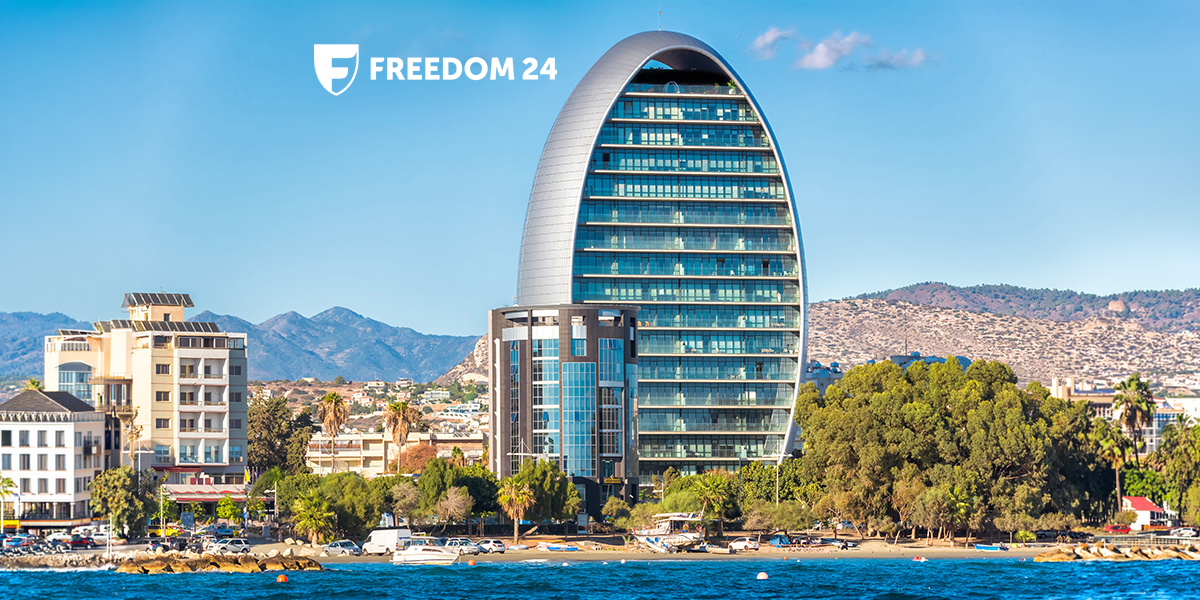
Freedom entered the European market in 2013 through Cyprus. The country became the holding’s first point of presence in the European Union and remains the headquarters of its European business today. The company currently operates under a license issued by Cyprus regulator CySEC, whose regulatory standards are considered among the strictest in Europe.
Other news
 From First Investments to Nasdaq: How Timur Turlov Built His F...
 Timur Turlov: “Chess Has Every Chance of Becoming as Popular a...
 From Travel to Groceries: How Freedom Holding Corp.’s Lifestyl...
 Freedom Holding Corp. Marks Seven Years Since Its Nasdaq Listi...
 Timur Turlov Meets with NIS Students in Almaty to Discuss Lead...
 President Tokayev Congratulates Timur Turlov on His Election a...
 Timur Turlov: Freedom Is Developing an AI Assistant for Custom...
 “Armenia Can Become a Bridge Between Europe and Central Asia” ...