Kazakhstan as Eurasia’s Investment Hub: Why Foreign Capital Is Flowing Into the Country
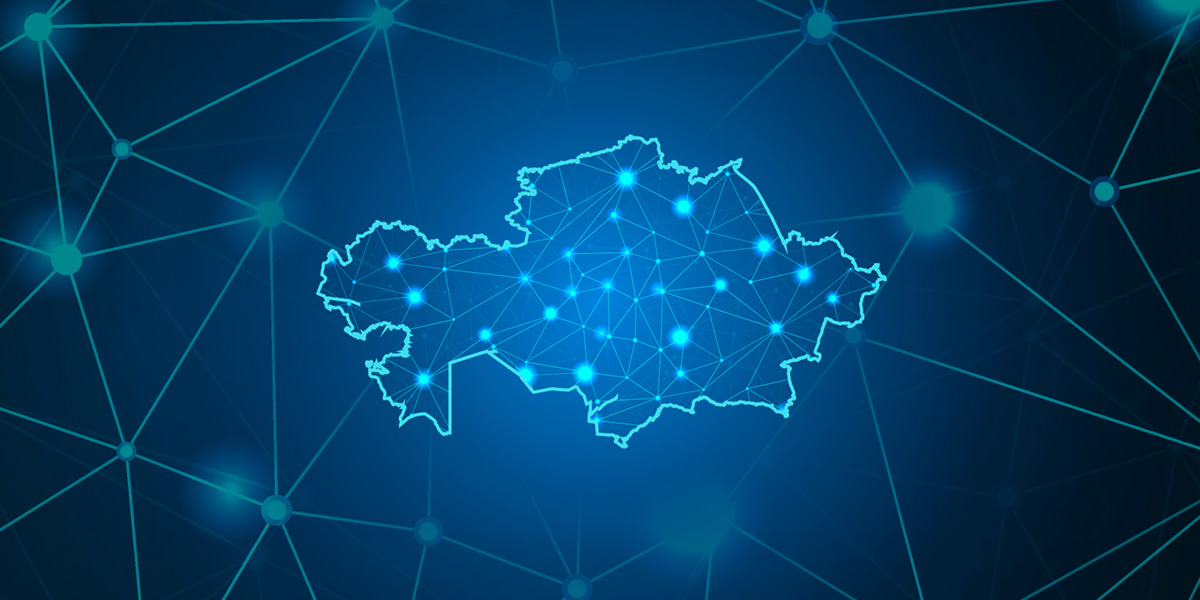
Over the past decades, Kazakhstan has attracted more than $451 billion in foreign investment. As developed economies face slowing growth and increasingly overheated markets, investors are turning their attention to emerging economies. Kazakhstan, where the stock of foreign investment has already surpassed half of the country’s GDP, has become one of the main beneficiaries of this trend. Here is how Freedom Holding Corp. contributes to enhancing Kazakhstan’s investment appeal.
According to the United Nations Conference on Trade and Development (UNCTAD), the stock of foreign direct investment (FDI) in Kazakhstan reached $151.3 billion, equivalent to approximately 52% of the country’s GDP. Kazakhstan accounts for nearly 69% of all foreign investment in Central Asia, making it the region’s primary gateway for international capital. For global investors, this reflects not only the scale of the economy but also the strength of its institutional framework, developed infrastructure, and access to major Eurasian markets.
Key Investors
Since gaining independence, Kazakhstan has attracted more than $451 billion in foreign investment. In 2025 alone, FDI inflows totaled approximately $20.4 billion, an increase of 14.5% compared to the previous year.
The Netherlands remains the country’s largest foreign investor, serving as a jurisdiction through which international corporations structure investments into major Kazakh projects. Interest from China, Qatar, the United Arab Emirates, and Saudi Arabia has also been growing steadily.
Central Asia’s Logistics Hub
One of Kazakhstan’s key advantages is its geographic location. Situated between China, Russia, the Middle East, and South Asia, the country serves as a strategic transit and logistics hub.
Kazakhstan is also strengthening its position as a transportation hub. The growth of foreign trade turnover to $143.9 billion underscores the country’s increasing integration into global supply chains. Freedom Holding Corp. is participating in this trend through investments in rail and air logistics as well as cargo infrastructure.
In April, Freedom Holding founder and CEO Timur Turlov acquired a 60% stake in rail operator Tranzit Trans Logistics, which specializes in freight transportation. Earlier this year, he also became a shareholder in cargo carrier KTZ Air Cargo, a project previously highlighted by Kazakhstan’s President as strategically important. Prior to that, the holding acquired a 60% stake in Sary-Arka Airport in Karaganda. Under the airport’s development program, cargo volumes are expected to increase more than tenfold, from 15,000 tons to 200,000 tons annually.
Growing Demand for AI and Technology
Kazakhstan’s technology sector is also expanding rapidly. Venture capital funds supported by Qazaqstan Investment Corporation are financing local startups and innovation projects.
Freedom Holding Corp. is strengthening its position in digital infrastructure through several large-scale initiatives. One of its flagship projects is the Akashi Data Center in Astana, developed in partnership with China Mobile. At the same time, the company is building its own cloud platform, Freedom Cloud, within the Astana Hub technology park, with planned investments of up to KZT 175 billion. The data centers will leverage Kazakhstan’s strategic position as a data transit corridor between Europe and China.
In 2026, the corporation registered Freedom AI Ltd. within the Astana International Financial Centre (AIFC). The company will focus on developing AI infrastructure in partnership with Nvidia.
Other Investment Destinations
Kazakhstan’s natural resources sector continues to attract significant investment. At the same time, international companies are increasingly entering the manufacturing sector, where total investment reached KZT 30.6 trillion in 2025.
Another area of growth is agriculture. Kazakhstan aims to become a major agricultural export hub for Eurasia, while newly established investment funds are focusing on production, trade development, and agricultural exports.
Emerging Markets Back in Focus
Investors are reassessing their heavy concentration in U.S. equities and seeking new growth opportunities, according to research by JPMorgan Chase and Lazard Asset Management.
One reason is the stronger economic growth outlook for emerging markets. JPMorgan expects developing economies to outperform advanced economies thanks to favorable demographics, rising domestic consumption, infrastructure investment, and the expansion of digital economies.
After years of strong performance in U.S. markets, equities in many emerging economies continue to trade at significant valuation discounts. Large institutional investors may increasingly use this disparity as a basis for capital reallocation.
Kazakhstan Remains a Capital Importer
Although Central Asia is still rarely viewed as a standalone investment region, Kazakhstan is drawing growing attention from international investors. In a recent Lazard report, the country was identified as one of the most attractive reform-driven markets alongside Turkey and Egypt.
At the same time, Kazakhstan remains a net importer of capital. The volume of foreign investment entering the country exceeds the overseas investments of Kazakh companies by roughly eight to nine times. This gap reflects the strong confidence international businesses place in Kazakhstan’s economic potential.
Over the coming years, the Kazakh government aims to attract at least $150 billion in additional FDI and double the country’s GDP by 2029.
Other news
 From First Investments to Nasdaq: How Timur Turlov Built His F...
 “Kazakhstan Will Diversify Its Economy Amid an Influx of Inves...
 From Groceries to Travel: Freedom Holding Corp.’s E-Commerce S...
 S&P Global Ratings and Moody’s Upgrade Ratings of Freedom...
 Shakhter Returns: How Timur Turlov Is Developing Football in K...
 Freedom Cloud: Why the Cloud Business Matters to Kazakhstan’s ...
 Freedom Yatırım Becomes First Foreign Brokerage in 34 Years to...
 Timur Turlov’s Interview for IntelliNews: why he bids for pres...