President Tokayev Congratulates Timur Turlov on His Election as FIDE President
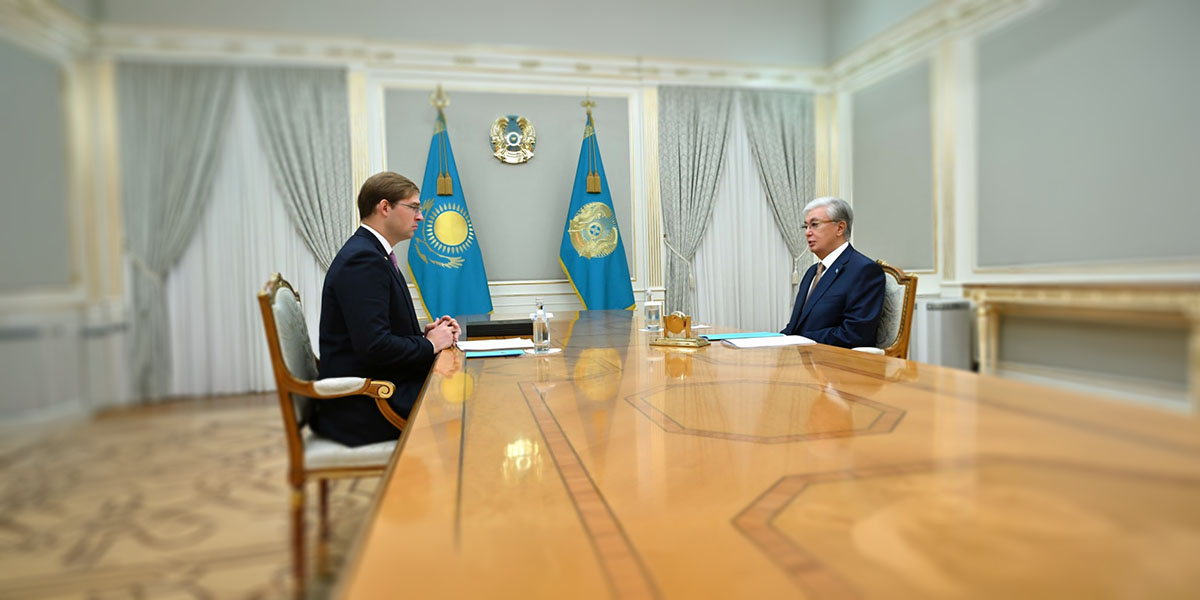
President of Kazakhstan Kassym-Jomart Tokayev met with the newly elected President of the International Chess Federation (FIDE), Timur Turlov, and congratulated him on his victory in the election. The head of state noted that the election of a representative of Kazakhstan to this position reflects the country’s growing standing and the increasing international recognition of its national chess school.
Meeting Between President Tokayev and Timur Turlov in Astana
The two discussed the further development of chess in Kazakhstan. According to Kassym-Jomart Tokayev, chess holds particular importance for the country not only as a sport, but also as a tool for developing the intellectual abilities of children and young people. More than 278,000 people in Kazakhstan currently play chess on a regular basis.
The President also highlighted the success of Kazakhstan’s women’s national team, which won silver at the World Chess Olympiad in Samarkand. Among the next priorities, he named stronger preparation of national teams, identifying and supporting young talent, expanding chess in schools, and developing chess infrastructure across the regions.
Another priority is closer cooperation between the Kazakhstan Chess Federation and FIDE, including the training of coaches and arbiters, joint educational projects, and the organization of major international chess tournaments in Kazakhstan.
Turlov, in turn, thanked the President for supporting chess and outlined his plans for the further development of FIDE, broader international cooperation, and new projects involving national chess federations.
“I fully understand my responsibility to the chess players of Kazakhstan, and now to the chess community worldwide, and I will work to achieve all the goals set before me as President of FIDE,” Timur Turlov wrote on social media following the meeting with the President.
How the FIDE Presidential Election Unfolded
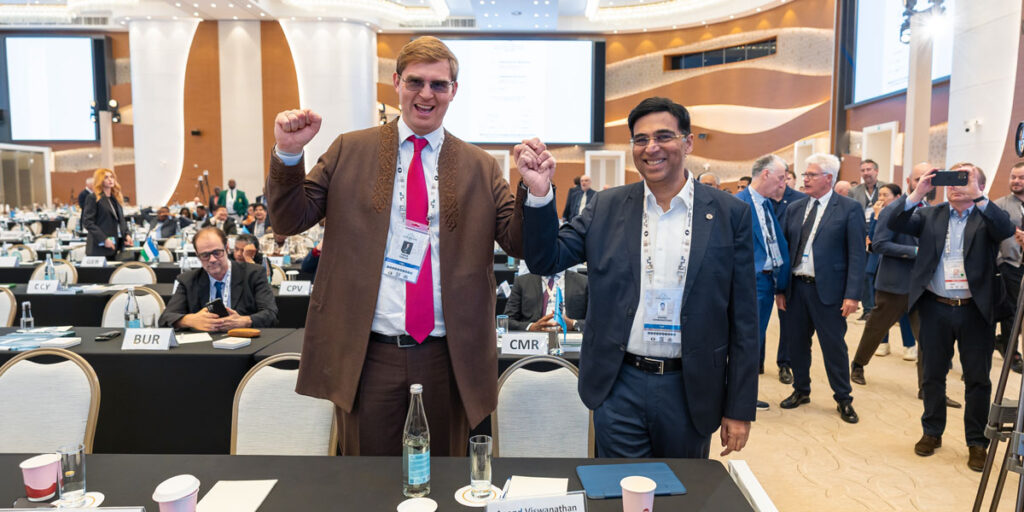
Timur Turlov was elected President of FIDE at the organization’s congress held during the World Chess Olympiad in Samarkand. The winner was decided in the second round of voting, where Turlov received 110 out of 196 votes. Three other candidates also competed for the presidency.
During the campaign, Turlov stressed that the FIDE President should personally engage in difficult and controversial discussions and be prepared to take public responsibility for the organization’s decisions. At the same time, he argued that the federation should not be managed exactly like a business: FIDE’s performance cannot be measured solely by revenue or the number of commercial contracts.
In his view, the organization’s key role is to create conditions for chess development in countries with very different resources. Some national federations receive substantial state and sponsor support, while others rely largely on a small group of enthusiasts. Rather than imposing a single model, FIDE should provide tools that allow each federation to grow according to its own local circumstances.
After the election, Turlov also said he was ready to incorporate strong ideas from the platforms of his former rivals and work with them where such cooperation could benefit the global chess community.
What Turlov Plans to Change in Global Chess
The new FIDE President’s program is built around several key areas: increasing funding for chess, improving the federation’s governance, accelerating digital transformation, and expanding educational initiatives.
One of the most significant proposals is to nearly quadruple FIDE’s development fund. Between 2027 and 2030, the plan is to allocate €6.2 million annually, compared with the current level of €1.6 million. This would bring total funding over four years to as much as €24.8 million. A separate program would provide three years of individual support to ten promising young chess players – five male and five female players.
Another $1.5 million per year is expected to be allocated to a dedicated FIDE media fund. Most of this money would go directly to national federations to promote chess and support their own media and communications projects. Part of the budget would also be used to train specialists and strengthen communications teams within national federations.
Governance reforms are also part of the agenda. Turlov has proposed introducing independent audits, regular financial reporting, and greater transparency around major commercial agreements signed by FIDE. In his view, these measures should strengthen trust among national federations, partners, and potential sponsors.
Another major initiative is the creation of a unified FIDE digital ecosystem. In the future, a player’s personal profile could combine their rating, game history, achievements, tournament registration, and access to educational materials. Artificial intelligence is expected to be used for game analysis, player and coach training, tournament administration, and anti-cheating efforts.
In professional chess, Turlov’s team proposes publishing the calendar of major tournaments two years in advance, gradually increasing prize funds, and improving conditions for players. Particular attention is also expected to be given to women’s chess: funding for relevant competitions is proposed to increase from $100,000 to $500,000, while the share of women in FIDE’s governing bodies would rise to at least 35%.
Many of these approaches have already been applied by Turlov in Kazakhstan, where he has headed the national chess federation since 2023. In recent years, chess programs have expanded to thousands of schools, thousands of tournaments are held across the country each year, and Kazakhstan has introduced teacher-training initiatives as well as digital tools for chess clubs and schools.
In 2025, Kazakhstani chess players won 162 medals at international competitions, including 64 gold medals. Over the past four years, Kazakhstan has also hosted six major FIDE tournaments. Timur Turlov now intends to bring part of this experience to the international level. One of the core principles of his new FIDE team is not the commercialization of chess for its own sake, but the use of additional financial and technological resources to support national federations, players, and the wider global chess ecosystem.
Other news
 From First Investments to Nasdaq: How Timur Turlov Built His F...
 President Tokayev Congratulates Timur Turlov on His Election a...
 Timur Turlov: Freedom Is Developing an AI Assistant for Custom...
 “Armenia Can Become a Bridge Between Europe and Central Asia” ...
 Timur Turlov elected FIDE president: what he plans to change i...
 Timur Turlov spoke to ChessBase about what chess teaches us – ...
 FIDE Presidential Election in Samarkand: Timur Turlov’s Campai...
 Freedom Media Agrees to Cooperate with South Korean Broadcaste...