Timur Turlov: “Chess Has Every Chance of Becoming as Popular as Formula 1”
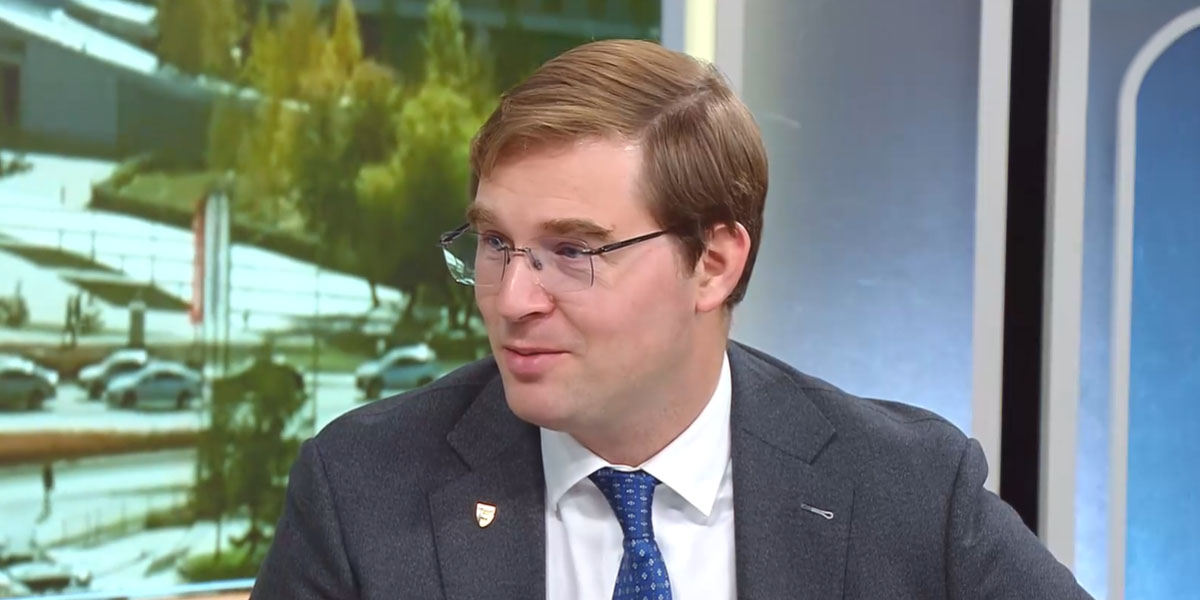
Timur Turlov, founder and CEO of Freedom Holding Corp. and President of FIDE, gave an interview to Jibek Joly TV. He discussed his plans to secure sustainable funding for chess, make broadcasts more engaging for a wider audience, and bring the game closer to inclusion in the Olympic program. The conversation also touched on supporting young athletes in Kazakhstan, entrepreneurship, and why, over time, money becomes primarily a resource for pursuing new projects.
We publish an abridged version of the interview below.
– How did you feel after being elected President of FIDE?
– It was probably the most difficult election campaign of my life, and an extremely competitive one. In the last five days alone, we held more than 80 meetings with delegates, in addition to all our other events. That followed three and a half years of extensive work with the global chess community.
We fell just one vote short of victory in the first round, so the election went to a second round. On the one hand, I was almost certain we would win because we had genuinely put in a tremendous amount of work. But it was a difficult campaign, with plenty of both positive and unpleasant moments. When the final results were announced, we felt joy and relief.
I am grateful that the global chess community supported our ambition to modernize chess, create a new digital platform, and make chess more prominent in the international financial and technology communities.
– What are your main priorities in your new role?
– My key objective is to bring sustainable funding into chess and secure its inclusion in the Olympic program. That is probably our greatest ambition.
If we get chess broadcasting right, using artificial intelligence to reveal what goes on inside a grandmaster’s mind during a game, it could become incredibly exciting. By bringing together leading chess analysts, artificial intelligence, and professional broadcast producers, we can create an outstanding product.
Chess has every chance of becoming a sport that rivals Formula 1. Our goal is to make chess just as exciting and prestigious, to turn it into an elite global community and elevate its status to the highest level. Hundreds of millions of people play chess thanks to online platforms, yet far fewer watch broadcasts or follow championships.
The previous FIDE leadership, Arkady Dvorkovich and his team, accomplished a great deal. They raised the game’s profile, resolved many problems, and built strong relationships across much of the chess world. We now have every opportunity to take the next step and turn chess into a major commercial industry.
– Why does chess hold such a special place in your life?
– It is an extraordinary game that allows you to understand yourself much better. Ultimately, you are playing primarily against yourself, even when competing against an opponent. You begin to understand how you think, when you make good decisions, and when you make bad ones.
Decisions in life are often structured much like decisions in chess. When we come up with a new business or project, it is important to think about what will happen after our move. How will others respond? How might they exploit the weakness we have exposed?
When you know what to prepare for, even if things don’t go your way, you can remain calm, think clearly, and keep your emotions under control. If you have a plan, you will almost certainly act more effectively and make better decisions.
– If you could play chess with anyone, who would you choose?
– I would be interested in playing with my father. He wasn’t a chess player, and unfortunately, I barely knew him. He went missing when I was very young.
It is difficult for me to dream of playing against the great chess players. I am a good organizer, a reasonably successful entrepreneur and executive, but certainly not a professional chess player. The difference in skill level is simply too great.
For me, chess has always been much more of a social tool, a way to connect with my children. We spend an enormous amount of time playing together. What other activity allows you to sit down with almost any of your children and spend half an hour together, talking about all sorts of things?
– What has been preventing young Kazakhstani chess players from making the transition to professional adult competition?
– For a long time, we had a situation where boys would become world champions in youth age categories but then fail to make it to the highest level of adult competition. We started looking into why that was happening.
After their first victories, young players need to work with professional coaches and travel to tournaments. That is expensive, costing at least tens of thousands of dollars a year, if not hundreds of thousands.
Our young talent development program now supports dozens of players, covering their travel within Kazakhstan and abroad, as well as tournament participation.
We have also started organizing many more competitions in Kazakhstan. Grandmasters and strong international players come here, giving our young talents invaluable competitive experience. They can now achieve grandmaster norms without leaving their home country. We also pay for training sessions with grandmasters. Essentially, we have begun closing the gap between early success and a professional chess career.
– What are the prospects for Kazakhstan’s women’s national chess team?
– We have a very young team. The girls will continue improving and playing better. At the Olympiad in Samarkand, they had a very good chance of finishing first. In some games, their reputation helped them put pressure on their opponents and turn losing positions into draws. In others, they were unable to fully capitalize on winning positions. But we are already very close to first place.
We are now working to bring major competitions, including the Chess Olympiad, to Kazakhstan. I believe we have everything we need to prepare and deliver strong results: not only to win gold in the women’s competition, which I believe is absolutely within our reach, but also to compete for a medal in the men’s event.
– Why is it important to teach chess in schools?
– It matters not only for professional sports but also for children’s overall development. Over the past three years, we have reached almost 2,500 schools. This is an enormous effort that the federation has undertaken together with government ministries.
Most of the funding in chess comes from private sources, but the government provides absolutely tremendous organizational support. Local administrations help us, and we have been able to introduce chess as an elective subject in schools. A minor specialization in chess teaching has also been introduced at a pedagogical university in Almaty.
Chess teaches children to concentrate. Today, when maintaining attention is increasingly difficult for everyone, that is incredibly important. At the same time, chess is an engaging game rather than a boring exercise. A five-year-old child and a grandmaster play by the same rules, but at completely different levels. Each finds their own enjoyment and depth in the game.
– Are there opportunities for children from smaller towns and rural areas?
– Opportunities have expanded significantly. The Kazakhstan Chess Federation has branches and regional federations in every region, with more than 20 branches across the country.
These branches do much more than simply organize tournaments. They have specific responsibilities: holding competitions, monitoring results, and organizing qualifying events. The schools where we are developing chess education in the Kazakh language are also located throughout the country.
At the same time, our work is not limited to professional sports. We organize club, social, and corporate tournaments, Senat Open, competitions for local governors’ cups, and the Chess in Prisons program. These initiatives are not always about discovering talent, but they are also an important part of the chess community.
– Do technologies make chess more exciting, or do they take away its human unpredictability?
– Technology definitely makes the game more interesting. Players can prepare much more effectively and have gained unique opportunities to analyze one another’s games and learn from their own mistakes. It is a perfect example of artificial intelligence enhancing human capabilities.
When both players use AI to prepare and review their mistakes, they expand their own capabilities. They become better at analysis and acquire more knowledge. But there is still a great deal of humanity in the game.
Our brains have limits when it comes to memorizing variations and recognizing patterns. Even if artificial intelligence helps you prepare, once you sit down at the board, you are still a human being, with all your abilities and limitations.
– What can chess teach an entrepreneur?
– It teaches you how to withstand setbacks. Even the strongest chess player in the world will lose many games. There is no such thing as a chess career without defeats.
In business, people often make their biggest mistakes under the influence of emotions. Not breaking under pressure is an incredibly important skill, one that I have also been learning over the past several years. I think the past five to ten years have given me an extraordinarily good training ground.
People expect a leader to be confident, to know what to do, and to remain composed no matter what challenges arise. That, too, is a skill that can be developed. The better you become at handling difficulties, the easier it is to withstand pressure and the fewer mistakes you make.
– How has your understanding of success changed over time?
– Financial achievements have almost never been particularly interesting to me. At some point, you have enough money to live comfortably and send your children to school. My quality of life ten years ago was roughly the same as it is today.
What becomes far more interesting is creating something that people genuinely need. Proving that it is possible to bring money into chess. Demonstrating that a digital bank from Kazakhstan can become a global business and that we can develop products that are among the best in the world.
This is not a zero-sum game. It is not about who wins money from whom. The question is whether we can create a high-quality product that gives people new opportunities. Inspiring people with ideas that ultimately create value is far more exciting to me.
Money is one of the resources you need to make things happen. But time, unlike money, cannot be borrowed. In that sense, time is the only truly scarce resource.
Other news
 From First Investments to Nasdaq: How Timur Turlov Built His F...
 Timur Turlov: “Chess Has Every Chance of Becoming as Popular a...
 From Travel to Groceries: How Freedom Holding Corp.’s Lifestyl...
 Freedom Holding Corp. Marks Seven Years Since Its Nasdaq Listi...
 Timur Turlov Meets with NIS Students in Almaty to Discuss Lead...
 President Tokayev Congratulates Timur Turlov on His Election a...
 Timur Turlov: Freedom Is Developing an AI Assistant for Custom...
 “Armenia Can Become a Bridge Between Europe and Central Asia” ...