Timur Turlov: “FIDE should become the regulator for online chess as well as offline”
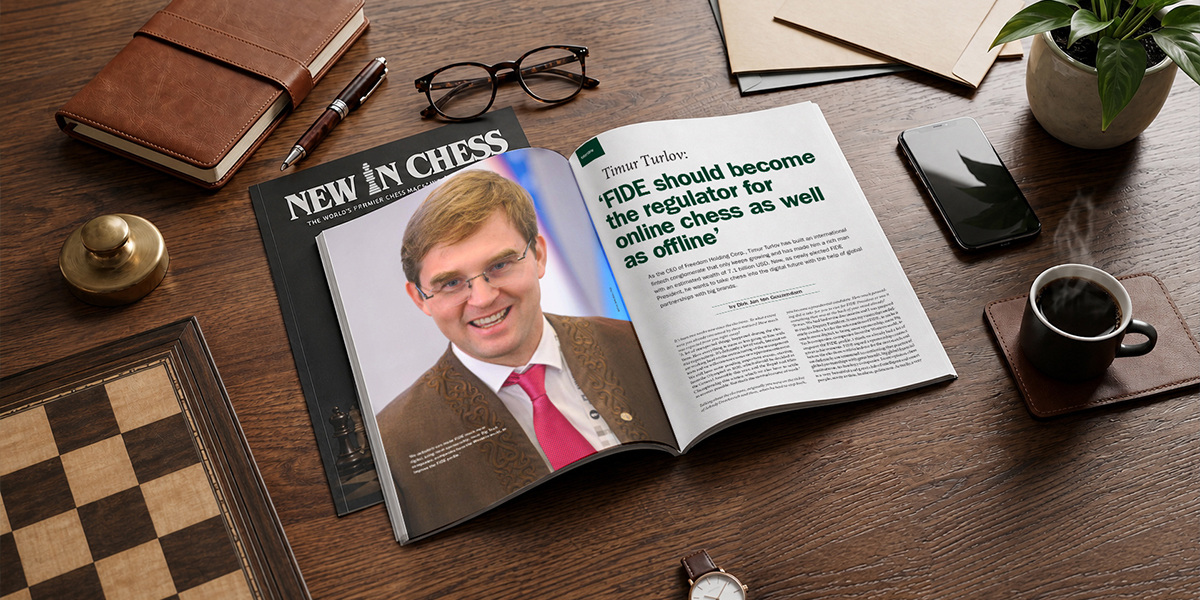
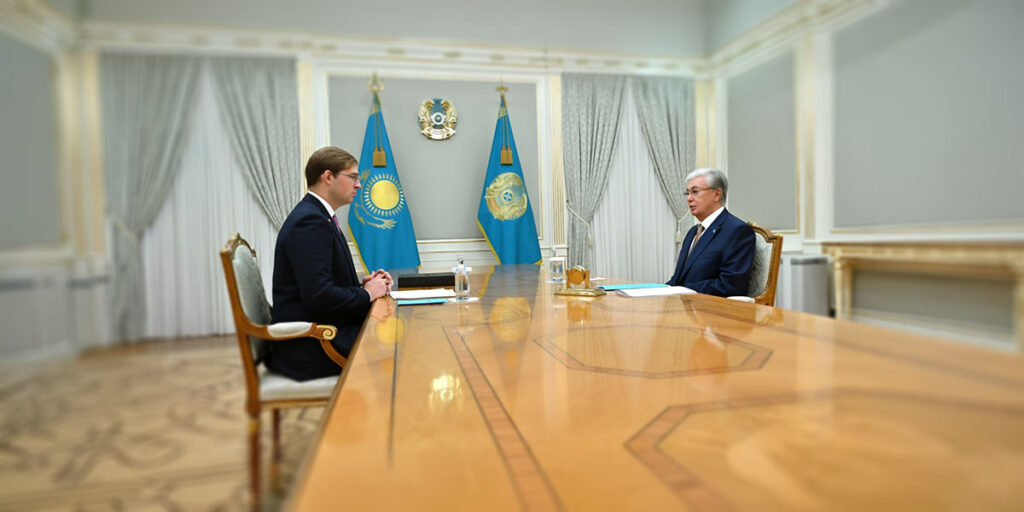
FIDE President Timur Turlov gave an interview to New In Chess, one of the world’s most respected chess publications.
It’s been two weeks now since the elections (at the time of the interview – Ed.). To what extent were you already consumed by chess matters? How much was expected from you right away?
A lot of unexpected things happened during the elections. Now everything is more or less going in line with our expectations. It’s definitely a lot of work, because we are working hard on the restructuring of the management team and we will announce some new appointments soon. We still have some important events pending, starting from the Olympiad in 2030, which should be decided at the General Assembly this year, and the Rapid and Blitz Championship this winter, which we also have to settle as soon as possible. But that’s the normal course of work.
Talking about the elections, originally you were on the ticket of Arkady Dvorkovich and then, when he had to step back, you became a presidential candidate. How much persuading did it take for you to run for FIDE President or was it something that was at the back of your mind already?
It was. We had some discussions and I was prepared to run for Deputy President. It was my vision that we definitely can do a lot for the reformation of FIDE, to make it much more digital, to bring more sponsorship, more Big Tech companies, companies from the Western world, to improve the FIDE profile. I think we already had a lot of great achievements. FIDE signed a sponsorship contract before the elections with Salesforce for the next match, and we definitely are interested in continuing that practice of global partnerships with great brands, big global financial institutions, technology companies. In my opinion, chess is a very beautiful and great club of intelligent and smart people, many artists, bankers, politicians. Actually, a very influential club which definitely should have much better commercial potential. I’m sure that we will improve the general compliance profile of FIDE.
So that was my agenda originally, and when it was decided that Arkady was not going to run, it was an obvious decision for me. It was a very short campaign, but at the end of the day, that was great because in this month I actually had a chance to talk to almost all 200 delegates. I visited four continents, held many hundreds of meetings over this short period of time, including 80 meetings in Samarkand in the last week before the Congress. I’m very happy that my campaign resonated with people and that I get a big credit of trust from the community. The elections were very tough, very competitive, a lot of the moves of my opponent were very unexpected. Some inspired me, some disappointed me.
What surprised you most? I mean, you knew it was not going to be easy.
Sometimes decisions of people whom I believed were part of my team. Like the President of the European Chess Union, Zurab Azmaiparashvili, who actually changed his mind the week before the election and switched to Wadim Rosenstein, even despite the fact that we had held some campaign meetings together. And also Hisham (Al Taher), the General Secretary of the Asian Chess Federation, changed his mind just a night before the elections. Which was, I think, the biggest surprise for me. And frankly, these were strange moves from those people. But I respect their political preferences, and still, of course, will be happy to work with these two major continents.
Did you get upset or did you keep your cool? Did you think, okay, this is part of the game?
Of course, that’s part of the game. When it’s about relationships and trust between people, sometimes that can bring some emotions, but that’s part of the game, for sure. Even the best chess players, they sometimes have emotions during their games, and sometimes make blunders, just because of their emotions, and not because of anything else.
Many chess players will only now begin to realize what a huge conglomerate of companies Freedom Holding Corp. is (a smile breaks on his face). It’s huge. It’s a huge fintech ecosystem, and you’ve indicated that you even see a place for chess in that system. How would you envision that?
So, FIDE is the key regulator of big offline events. All the international championships, all the main events in the calendar for professional players are governed by FIDE. FIDE is one of the most influential international organizations and definitely the only regulator of chess. But, unfortunately, historically FIDE has not much authority, not much involvement in the digital world of chess. And it’s huge now. 99.99% of the games are being played online on different platforms. On Chess.com, on Lichess, on Playchess, now World Chess. And I’m sure that FIDE should make a bold move forward with its digital presence to help to improve our CRM (Customer Relationship Management) platform, which I hope will be done with the help of Salesforce very soon. I also believe that FIDE should start to be present in online competitions and should become the regulator for online chess as well as offline. Otherwise, very soon we will have very commercial regulators of online chess instead of FIDE. Which, in my opinion, would not be to the benefit of the community and even not to the benefit of any private partners and commercial platforms. Commercial platforms should continue to do their job. They do it very well, but we still need a neutral organizer and a real international organization on behalf of them.
So, I will work for that, to make sure that we will digitalize all the national federations, give them a platform, give them the ability to run online tournaments, give them the ability to monetize this digital growth and development. And, of course, I also want to make chess more embedded in different digital ecosystems and platforms. We already launched that on the platform of the Freedom Super App in Kazakhstan. (Shows the app on his phone in front of the camera.) When you open up the digital bank, Freedom Bank, which is one of the most popular now in Kazakhstan, you have this super app, and in this super app, there is not only debit cards, insurances, stock brokerage, you can also play chess. And we already made an integration for chess with the ChessBase platform, so you can play. You can solve puzzles. You can watch chess broadcasts from different tournaments. You can manage your national chess ID and your FIDE ID. You can register to some local tournaments, participate in local competitions, and even incentivise your kids in the kids version of this application. They can get some incentives from parents, in case they solve some chess puzzles every day or something like that. That’s a part of the gamification and implementation of chess in some digital ecosystems, and that’s just an example how we can partner up and how we can grow globally.
This world has more and more become several chess worlds. And one of them is online. Is this a way of unifying the fractured chess world, by embracing these new technologies and bringing them into FIDE?
Absolutely. Hundreds of millions of people actually play chess online, and that’s the most important part. We definitely should unify online and offline. Create the integrity of ratings. Create opportunities for online players to participate in big offline events in real tournaments on the chessboard. In my opinion, it’s necessary at the end of the day for our organization to survive.
A name that was mentioned relatively rarely during the campaign was Magnus Carlsen, who still is an extreme force in the chess world. Many traditional chess players feel we kind of lost him from classical chess. Is it one of your aims to see if there’s ways to get him back?
In my opinion, it’s obvious that everything should accelerate. And time controls also should accelerate. That’s a problem which we will carefully continue to discuss with Vishy (Anand), with all the rest of our FIDE council members, vice presidents, the broader chess community. This discussion how we should accelerate chess to get more involvement of the chess players. Magnus, who is also insisting on that, is definitely required for a discussion and proper management of this discussion. It should not be decided in a very closed circle, it should be a part of a well facilitated public discussion on this matter. But in general, yes, we have to adapt. We have to move forward. We have to implement these fast classic controls, and still preserve some opportunities for classic controls, which we should keep and make available. But, of course, we have to fight for Magnus as well as for other chess players to make sure that the chess community will still be united and still will continue to evolve to get better support from key chess players, from advertisers.
Sometimes people are asking to protect some specific rules that are not very popular among top players and among the general public. That means that we should protect chess players, especially professional chess players, so they can make money. Many professional chess players definitely need more opportunities for the commercialization of their activities. It’s not about FIDE, it’s about them. There’s still not enough money in chess. Maybe the key top players have decent earnings, but even for them, it’s still not huge money. And if we go lower than the top 10, it’s definitely impossible to survive sometimes without the strong support from national federations or corporate sponsors. We should continue to work on the commercial potential of chess.
Chess is often promoted as an educational tool. You might also see it as a political tool. When I think of the way you integrated your activities for the Kazakhstan Chess Federation and your business, it feels like a natural bond. Is that something that you also envision for FIDE?
Absolutely. Chess is a great educational tool and that’s why we formed this additional force of the International School Chess Federation, with a separate budget, with a separate team. I’m sure we have to continue this work, we have to help many national federations to implement chess in the curriculum, into school education. That’s great, because it helps kids to combat this doom scrolling on TikTok, on social media, and helps them to develop concentration, to develop strategic thinking, all that stuff. In my opinion, chess is definitely as impactful as mathematics. It’s not just about chess. It’s about education itself, about the ability to develop our kids. And of course, as I stated already, we have to continue to develop chess not just as a professional sport, but also as a great social instrument, as a great club of people. In Kazakhstan, we now have so many different social tournaments, different corporate tournaments for businesses, for the banking sector, for our enforcement ministries, like the Ministry of Internal Affairs. There are activities we do for the army, for prisons, and that’s beautiful. Let’s improve the profile of the game. Let’s improve the support from society. It’s much easier to raise money for tournaments. It makes federations much more sustainable. And it helps to improve the public media profile. In my opinion, that’s the way to make each national federation much more sustainable and much less dependent on subsidies from the FIDE development fund or their governments.
Over the past years, you’ve already financially supported several FIDE events. Your opponents in the campaign said they were fighting patronage (He smiles). You have said, that before raising money, it is necessary to first have a financial basis to work on future plans. Could you say something about your philosophy, your vision in this matter?
Of course, I have a dream to make FIDE sustainable. That is a goal we started to work on from the very first day. And I think this partnership with Salesforce, this partnership with Google, with other companies, which FIDE has and will continue to develop further, is a good example of that. I’m more than interested to make FIDE sustainable and independent in the long run. But in this campaign, when I had talks with many, well, actually 200 different federations, I have seen a lot of federations with a beautiful compliance profile located in Western Europe, headed by respected people, and even despite the fact that they are part of big economies, sometimes it’s not enough to be able to raise some money. Sometimes to make good energy, you have to start the engine. To start this engine, you have to provide some initial ground to put professional people inside the federation to make sure that the federation is sustainable. FIDE has already advanced the last several years, and now we have access to much better partners. To do business well, you already need some money, and so that’s my actual goal. I’m supporting FIDE, and that will open up new horizons, because we need to get out of this loop of poverty. That’s my view on that.
People can look up all your business successes. You are a family man and you have all these businesses. Is there any free time? And if you have any free time, what do you spend it on? Are there any secret hobbies that we should know about?
No, I have six kids, so I try to spend as much time as I can with my family. And I think I am more successful there than many of my friends, even despite my many different roles. But once again, to manage a big international organization, one person is not enough anyway. Not for multinational companies, not for FIDE. We need a team. We need a very strong team, and I need to pick the right people to create the right culture and make sure that they will have enough resources to do their job. That’s my role as president. I’m committed to do that and I think it will complement my work for further international development of my business. So I can sometimes do both, travel for my business needs and travel for chess at the same time, visiting federations during the same trips, visiting some government officials discussing chess development. It could be complementary and all of my job in the holding is also not operational, it’s now more representative.
Are there other pastimes?
A couple of times a year, I try to go fishing in a different part of the world. I enjoy to be able to spend at least some days outside of network coverage and to really be able to be in silence (laughs).
That sounds great. Finally, you’ve talked to all these delegates, which must have been enormously time and energy consuming. Do you have the feeling that there’s a chance Gens Una Sumus can become reality?
(Calmly) Yes, yes, yes, yes. We definitely have this chance, and I will work as hard as I can to unite the community.
Other news
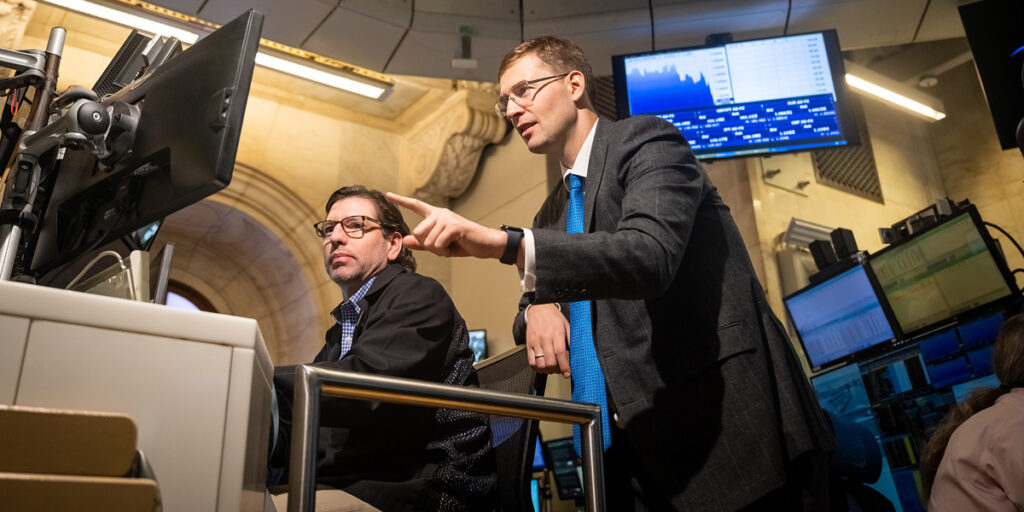 From First Investments to Nasdaq: How Timur Turlov Built His F...
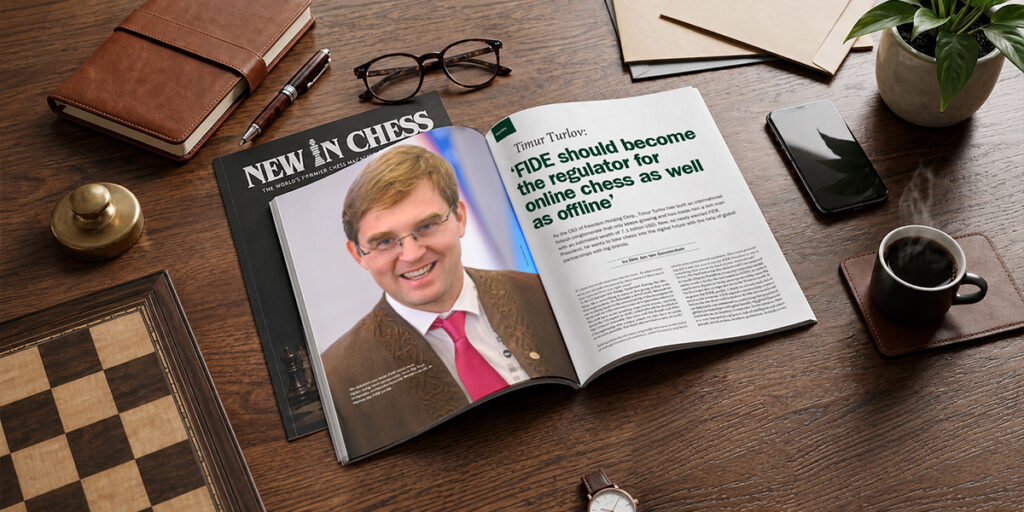 Timur Turlov: “FIDE should become the regulator for online che...
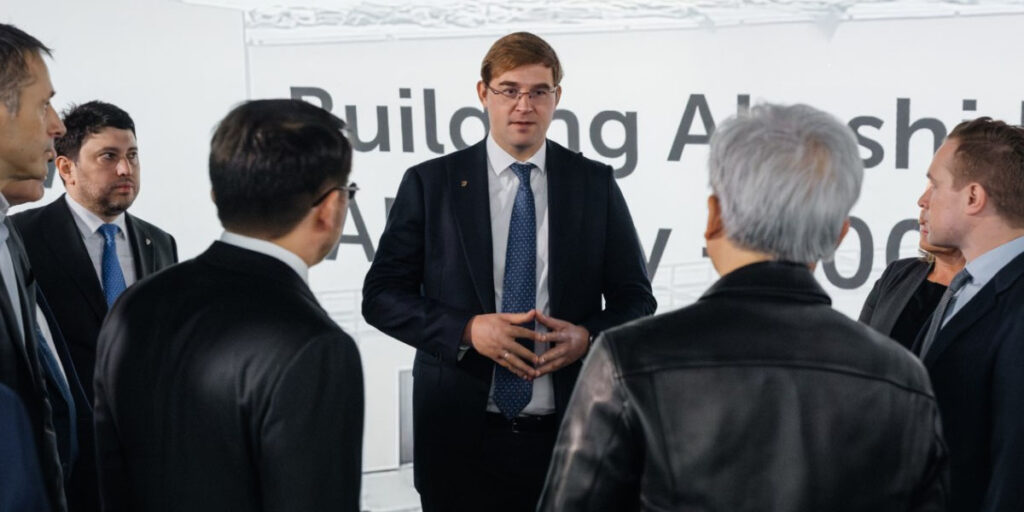 Kazakhstan as an AI Computing Hub: Timur Turlov’s Projects and...
 Timur Turlov: “Chess Has Every Chance of Becoming as Popular a...
 From Travel to Groceries: How Freedom Holding Corp.’s Lifestyl...
 Freedom Holding Corp. Marks Seven Years Since Its Nasdaq Listi...
 Timur Turlov Meets with NIS Students in Almaty to Discuss Lead...
 President Tokayev Congratulates Timur Turlov on His Election a...